Selecting the right Point of Sale (POS) platform is a strategic decision for any new enterprise. The appeal of “free” POS software is significant, particularly for ventures operating with limited capital. However, it is crucial to evaluate whether this is the optimal long-term solution. This guide evaluates the strategic trade-offs between free and paid POS platforms to empower South African startups to make an informed investment decision.
A comprehensive POS system serves as the operational foundation for modern retail and service management. To fully understand the capabilities of an advanced platform, we invite you to explore our ultimate guide to POS System: The ultimate guide for businesses.

The Advantages of Free POS Software for Startups
For emerging businesses, free POS software provides several key advantages.
No Initial Capital Outlay
The most prominent benefit is the elimination of upfront financial commitment. For a South African startup managing a strict budget, avoiding a monthly subscription fee—which can range from R500 to R1500—is a significant advantage. This allows you to begin processing transactions immediately without allocating capital to software licensing.
Simplified Implementation
Free POS systems are generally engineered for intuitive use. They are often compatible with existing hardware, such as tablets or laptops, enabling you to become operational without requiring specialized technical assistance. This simplicity is a valuable asset when managing the numerous responsibilities of a new business owner.
Essential Functionality for Initial Operations
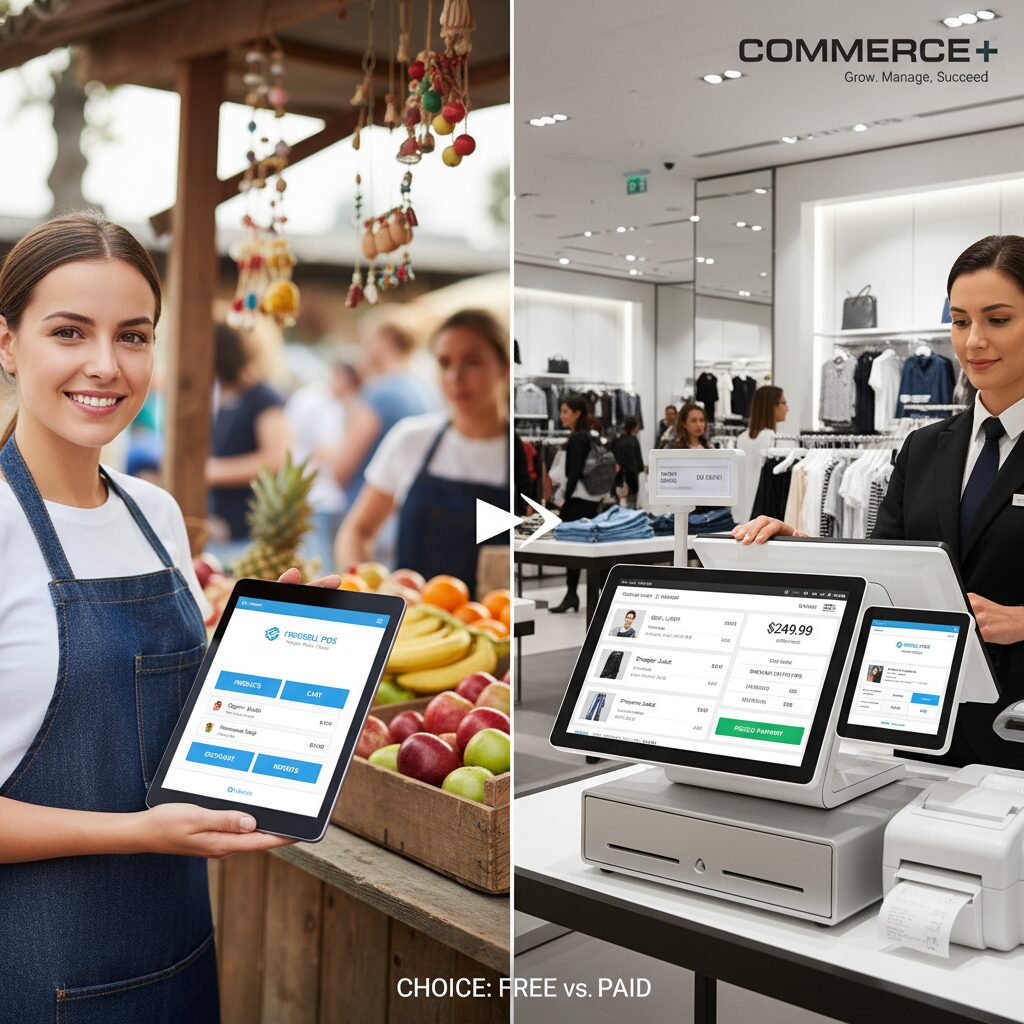
If your business model is straightforward—such as a pop-up store, a market stall with a limited product range, or a service-based business with basic invoicing requirements—a free system can be sufficient. It will facilitate core transactional functions: recording sales, issuing receipts, and managing a small inventory.

The Disadvantages of Free POS Software: Evaluating the Indirect Costs
The term “free” can be misleading. The limitations inherent in free POS software often result in indirect costs manifested as operational inefficiencies, missed revenue opportunities, and mandatory fees.
Lack of Dedicated Technical Support
When your system experiences downtime during peak business hours, access to support is critical. As noted in a guide by POS Nation, most free software plans offer minimal or no customer support, leaving you to troubleshoot complex technical issues independently. In contrast, paid platforms provide dedicated support teams to resolve issues promptly and minimize operational disruption.
Inherent Scalability and Feature Ceilings
Your startup is designed for scalability, but free POS software is not. These systems are typically entry-level versions that impose limitations on:
- Inventory: You may be restricted to a small number of SKUs (Stock Keeping Units).
- Users: Adding new personnel may require a mandatory upgrade.
- Transactions: Certain free plans cap the volume of transactions you can process monthly.
Advanced capabilities essential for scaling, such as customer relationship management (CRM), robust business intelligence, and multi-location management, are almost universally exclusive to paid tiers.
Mandatory Payment Processor Integration
One of the most significant drawbacks is the lack of choice in payment processing partners. Many “free” POS providers, including several prominent in South Africa, generate revenue by locking you into their proprietary payment ecosystem and imposing non-negotiable transaction fees. While a paid system incurs a monthly fee, it frequently offers the flexibility to select a processor with more competitive rates, yielding substantial long-term savings.
Absence of Critical System Integrations
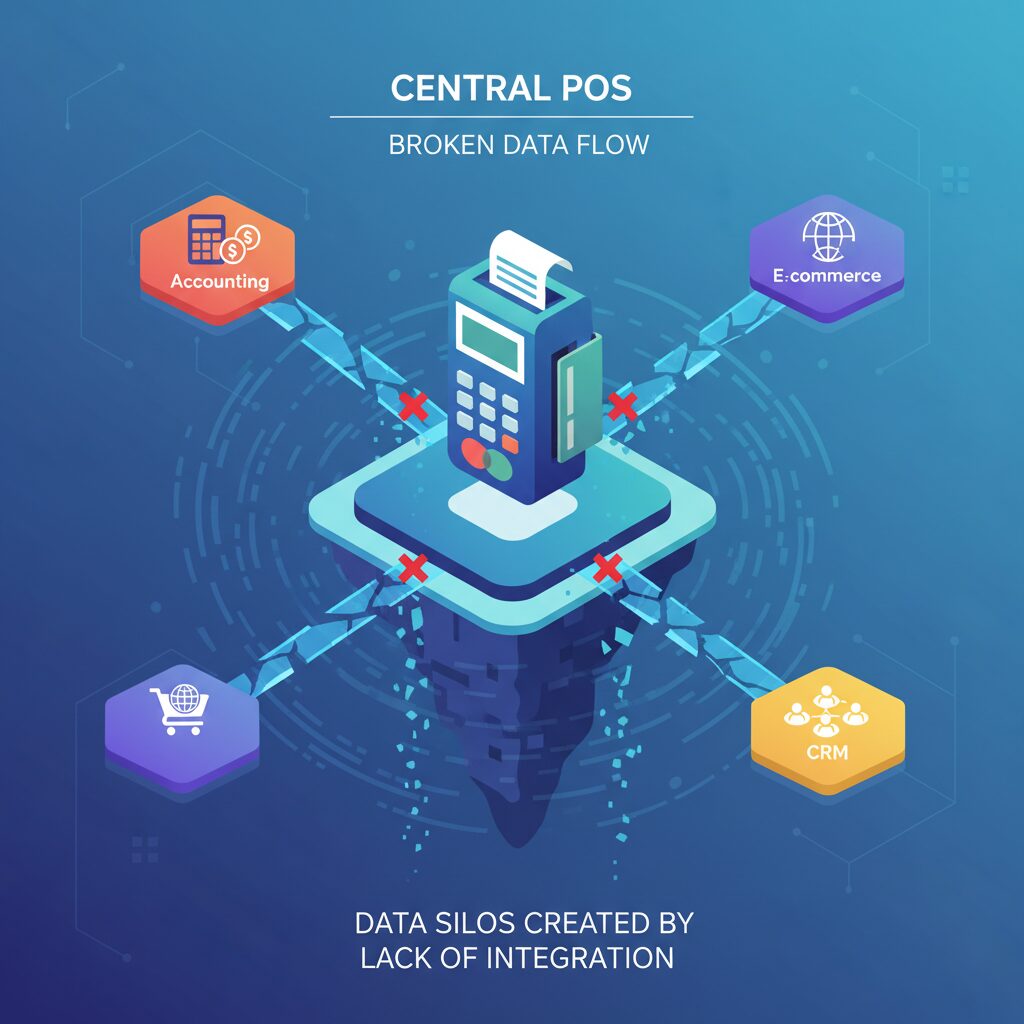
A modern business thrives on an integrated data ecosystem. A paid POS platform integrates seamlessly with your accounting software (e.g., Xero, Sage), e-commerce platform (e.g., Shopify, WooCommerce), and marketing automation tools. Free systems rarely provide these API integrations, creating data silos and requiring time-consuming manual data reconciliation.
The Verdict: Deciding Between Free and Paid Platforms
The optimal decision depends on your specific business model and growth trajectory.
Scenarios for Deploying Free POS Software
A free POS system is a viable short-term option under these circumstances:
- Concept Validation: Operating a temporary pop-up or market stall to test a business idea.
- Micro-Business Operations: Functioning as a sole proprietor with a minimal product catalog (e.g., fewer than 20 items).
- Severe Capital Constraints: Bootstrapping every facet of the business prior to securing funding.
Indicators for Investing in a Paid POS Platform
It is time to invest in a paid POS platform when your business demonstrates clear signs of traction. Key triggers include:
- Hiring Your First Employee: Requiring multi-user functionality and role-based access controls.
- Expanding Your Product Line: Managing an inventory of 50+ products without a robust system presents a significant operational challenge.
- Developing a Customer Base: Needing CRM capabilities to analyze customer behaviour and implement loyalty initiatives.
- Omnichannel Sales: If you operate both a physical and an online store, an integrated, paid system is non-negotiable for synchronizing inventory and sales data in real-time.
As a detailed comparison by WAPPoint explains, a paid system is a comprehensive tool for growth, not merely a device for processing transactions.
For most ambitious startups, the optimal strategy is to consider free POS software as a temporary solution, not a long-term strategic asset. Plan to migrate to a scalable, paid platform from a reputable provider within your first 3-6 months of operation. The investment will deliver a strong return on investment through enhanced operational efficiency, superior data intelligence, and the capacity for unrestricted growth.