Luckily, there is a way to stop losing those customers. By installing self-service kiosks that work alongside your existing POS terminal, you can eliminate wait times and let customers control their own ordering experience. In this guide, you will discover how this technology increases average order values, ensures 100% order accuracy, and empowers your staff to focus on delivering great service.
Beating the Rush: How Restaurant Kiosk Systems Drive Throughput in South African QSRs
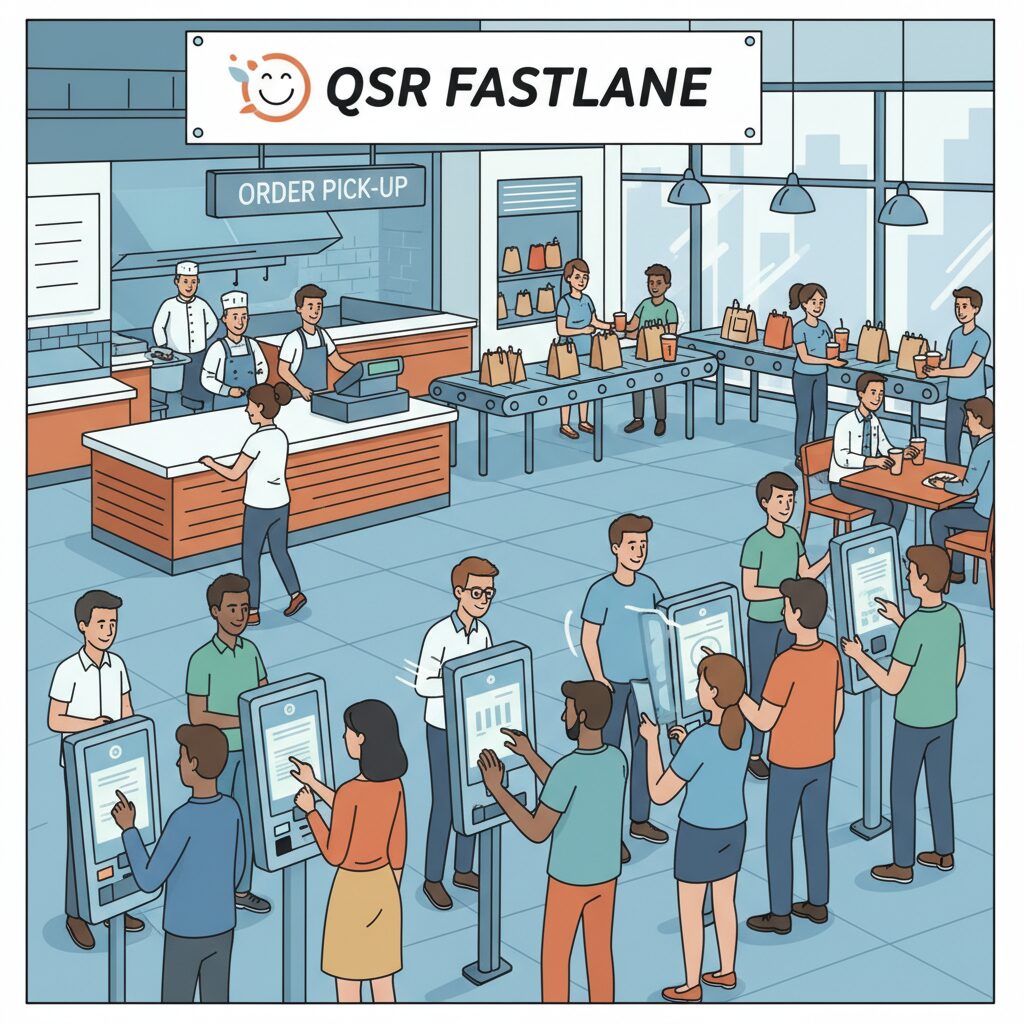
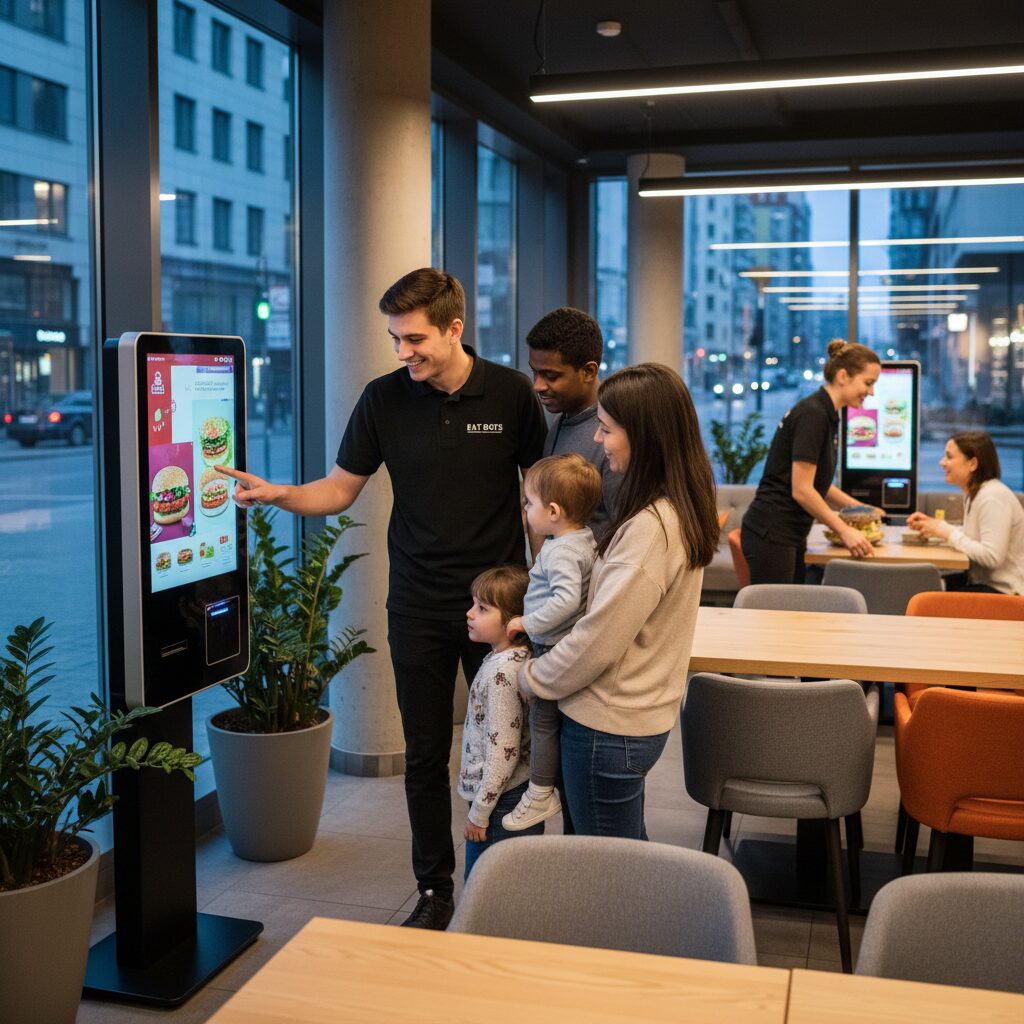
To understand why this technology is so effective, you first have to look at how it changes the way your restaurant breathes during a rush. The primary benefit of restaurant kiosk systems is their capacity to dismantle the old, “one-to-one” ordering model. Instead of a single cashier serving one customer at a time, multiple kiosks allow your guests to process their own orders in parallel.
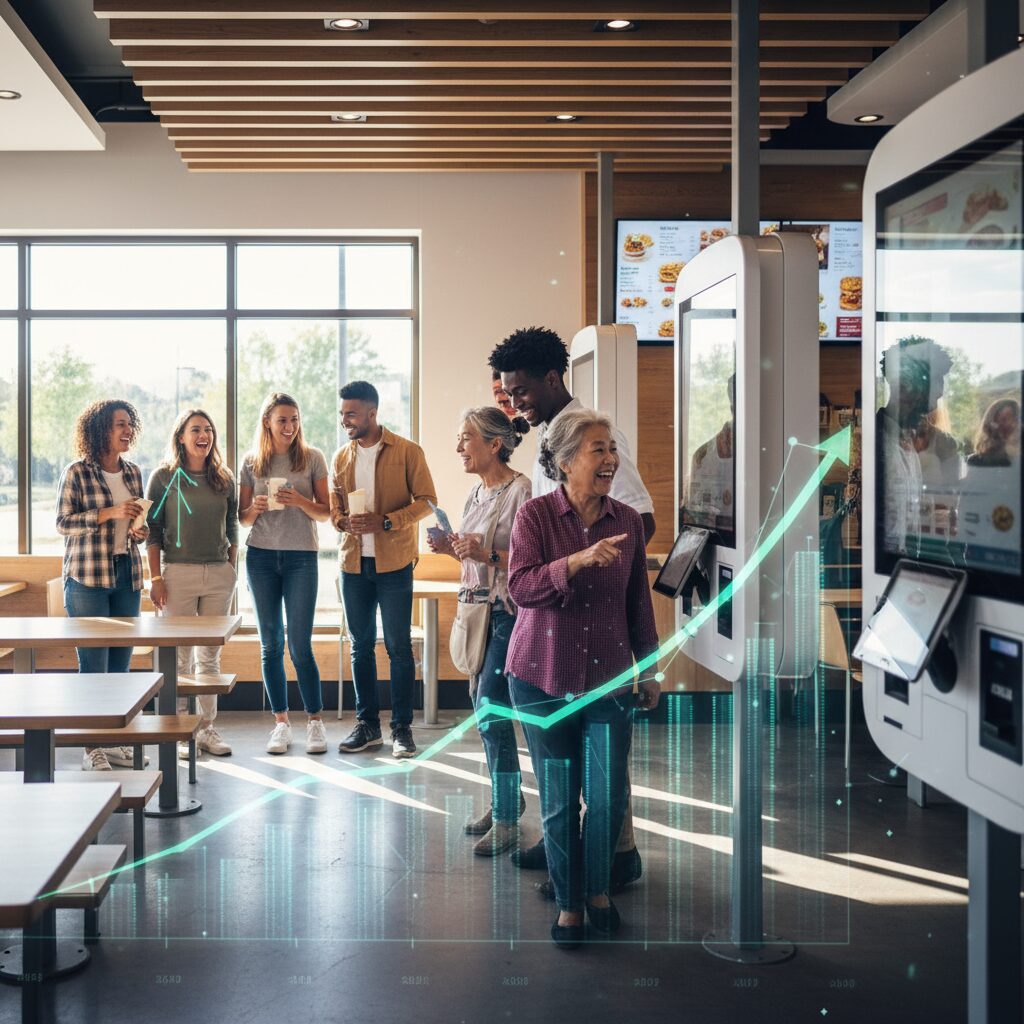
This shift to simultaneous ordering has a massive impact on your bottom line. In fact, research from the restaurant technology platform Lavu indicates that self-service kiosks can reduce order wait times by as much as 40%.
For your customers, this means a faster, more positive experience. For your business, it means maximizing throughput during peak hours—allowing you to serve more people with greater speed and far less friction.
This operational enhancement extends beyond pure speed:
- Reduced Customer Pressure: Patrons can navigate the menu at their own pace without the social pressure of a waiting line.
- Customer Control and Customisation: Guests are empowered with full control over order modifications, ensuring complete accuracy and satisfaction.
- Improved Environment Flow: Reduced queue lengths contribute to a less congested and more organised restaurant atmosphere.
Beyond Speed: Increasing Revenue and Average Order Value
While restaurant kiosk systems are highly effective at shortening queues, they also have a direct, measurable impact on your daily profit. Data consistently shows that customers tend to spend more when ordering through a digital screen. In fact, orders placed via kiosks are frequently 10–30% higher in value compared to those placed with a cashier.
This increase in revenue is driven by a mix of smart system design and customer psychology:
-
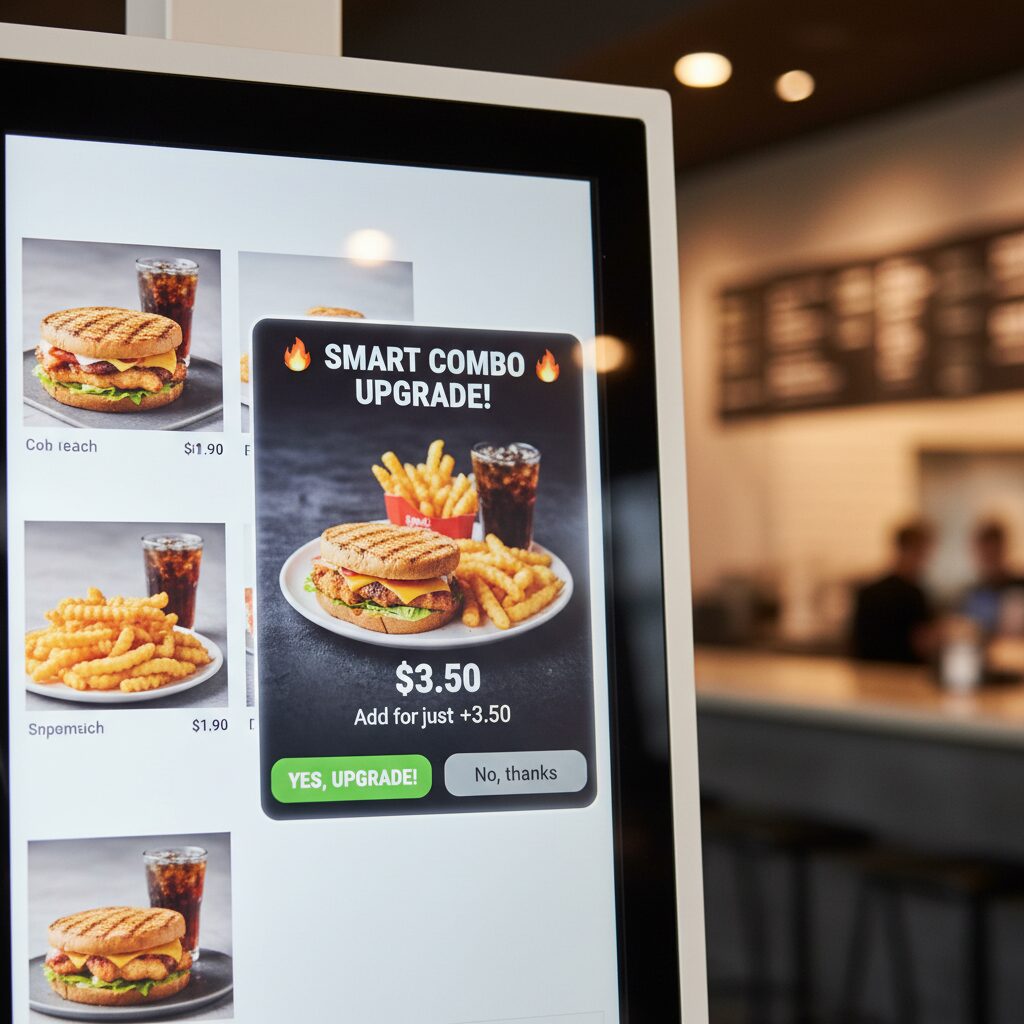
Automated, Intelligent Upselling: The system is programmed to suggest relevant add-ons at the perfect moment. For example, an order for a burger can trigger a visually tempting prompt for a meal combo or a premium side dish.
-
Better Visual Merchandising: High-resolution photos of your most profitable menu items are much more persuasive than simple text on a traditional menu board. When food looks great, customers are more likely to buy it.
-
Stress-Free Menu Exploration: Without the social pressure of a line forming behind them, customers feel more relaxed. This encourages them to browse the full menu and add “extras” like desserts or specialty drinks that they might have otherwise skipped.
When a customer completes a payment in ZAR through the integrated POS terminal, the transaction is not only faster but is often for a significantly higher amount, directly increasing your revenue per guest.
Why Your POS Terminal Matters in a Kiosk Setup
Kiosks handle the front-end experience, but your POS terminal is what keeps everything running behind the scenes.
Every order placed on a kiosk still needs to be processed, sent to the kitchen, and recorded correctly. If your POS terminal can’t keep up, delays and errors will still happen, even with kiosks in place.
The key is having a POS system that can handle multiple orders at once without slowing down. It should also give you clear visibility into what’s happening across your restaurant, from sales trends to peak trading times.
In a busy QSR, the difference isn’t just having kiosks. It’s having a POS terminal that can support the volume they create.
Smarter Operations: Improving Accuracy and Optimising Staff
The integration of restaurant kiosk systems into your workflow streamlines operations from the front-of-house to the kitchen, cultivating a more efficient and error-free business environment.
Eliminating Order Inaccuracies
Order errors stemming from ambient noise or human miscommunication are a frequent cause of food waste and customer dissatisfaction. Restaurant kiosk systems completely remove this variable. The customer inputs their order directly, which is then transmitted seamlessly to the kitchen display system. This process guarantees 100% order accuracy, reducing waste from remade items and improving overall customer satisfaction.
Reallocating Your Team for Maximum Impact
When restaurant kiosk systems take over the repetitive, “robotic” task of manual order entry, your team is suddenly liberated. They are no longer tethered to a screen, struggling to hear orders over the lunchtime noise. Instead, they are free to step out from behind the counter and focus on high-value, customer-centric activities that truly elevate the dining experience.
Instead of spending their entire shift dedicated to transactional tasks at the POS terminal, your team can pivot to where they are needed most:
-
Becoming “Service Ambassadors”: Your staff can personally greet and welcome every patron who walks through the door, setting a friendly tone for the entire visit.
-
Concierge-Style Support: They can act as “hosts” on the floor, proactively assisting guests who might be new to the kiosk interface or have specific dietary questions.
-
Mastering Quality Control: With more time on their hands, your team can conduct a final “quality assurance” check on every tray and bag, ensuring the presentation is perfect before it reaches the customer.
-
Creating a Pristine Environment: A clean, inviting dining area is essential for repeat business. Your staff can now ensure that tables are cleared instantly and the atmosphere remains top-notch, even during the busiest hours.
A self-service kiosk doesn’t replace your staff; it empowers them. It acts as a critical component of a modern, integrated platform that transforms your personnel from “order-takers” into hospitality experts.
Scaling Your Success?
Restaurant kiosk systems are a game-changer for a single shop, but running a growing brand across several different locations brings its own set of challenges. When you start opening more branches, you need a system that can talk to all of them at once.
If you’re planning to expand or already managing multiple sites, check out our companion guide: Restaurant POS Systems: The Ultimate Guide for Franchises & Multi-Location Chains.
We’ve simplified the process for you by comparing the best systems for South African businesses and providing a step-by-step plan to help you pick the right setup for your growing empire.
Where Eezipay Fits In
If your goal is to reduce queues and increase order value, restaurant kiosk systems are a powerful first step, but they deliver the best results when fully connected to your payment and POS environment.
As your business grows, you’ll need more than just faster ordering. You’ll need real-time reporting, seamless payment processing, and a system that keeps your kiosks, POS, and payments working together without friction.
That’s where Eezipay fits in, with solutions like the Mobile Payment Terminal (MPT), designed for fast-paced environments like QSRs. It allows you to accept all major payment types (tap, card, QR), integrated directly with your POS, and manage transactions across your entire operation from one place.
👉 Explore our Mobile Payment Terminal
👉 Or book a quick 15-minute demo to see how it works for your setup
The Future of the QSR is Integrated and Self-Sufficient
The numbers don’t lie! Customers are moving toward self-service faster than ever. A recent study confirmed that 30% of customers actually prefer ordering from a kiosk rather than interacting with a cashier. In a busy South African QSR, meeting that preference isn’t just about being high-tech because it is about giving your guests the fast, easy experience they expect.
By cutting down queues, naturally increasing your average order value, and making sure every order is 100% accurate, restaurant kiosk systems offer a massive boost to your bottom line. They’ve moved past being a futuristic idea and are now a must-have tool for any restaurant that wants to stay ahead of the competition.
If you’re ready to stop the peak-hour bottlenecks and build a more profitable, efficient business, the solution is right at your fingertips!