A canteen management system can quietly determine whether your corporate catering operation stays profitable or loses money through shrinkage, cash handling, and poor operational visibility. Many facilities teams still rely on disconnected tools, manual reconciliation, and delayed reporting that make it difficult to control daily food costs with confidence.
This guide explores how modern corporate catering software helps organisations reduce inventory losses, remove cash-related security risks, and gain real-time operational insight through a closed-loop cashless environment. You will also learn how integrated reporting, live stock tracking, and centralised payment controls improve decision-making across high-volume canteen operations.
Discover how a modern canteen management system can turn your on-site dining environment into a more secure, efficient, and data-driven operation.
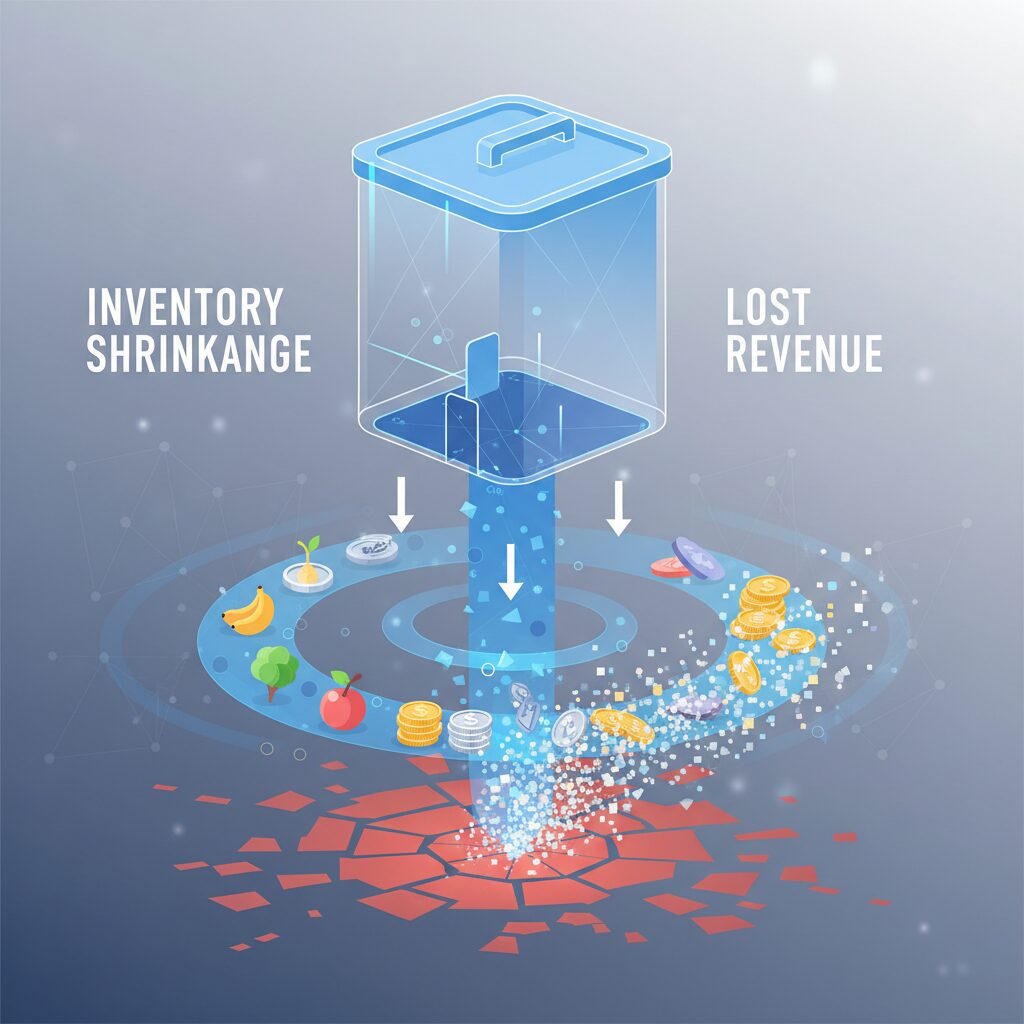
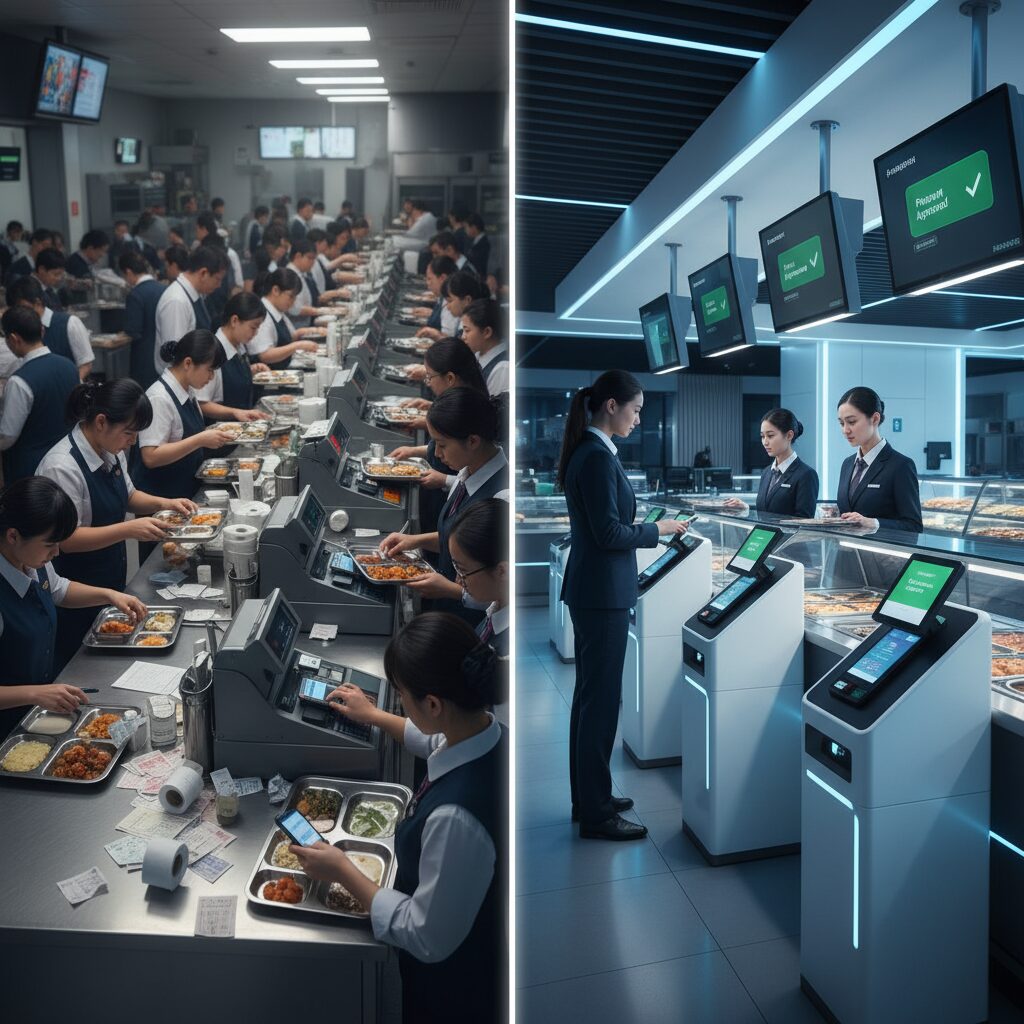
The Financial Impact of Manual Canteen Operations
Relying on manual processes and cash creates significant, often untracked, costs that erode your operational budget. These issues fall into three primary categories.
Financial Leakage Through Inventory Shrinkage
When food cost targets are consistently missed, the culprit is often shrinkage—the loss of inventory due to factors other than legitimate sales. In a manual system, this occurs through multiple avenues:
- Unrecorded Transactions: A busy cashier may neglect to record a transaction, or complimentary meals are provided without being tracked through the system.
- Inconsistent Portioning: Without integrated recipes and data, kitchen staff may serve portions that exceed specifications, silently eroding food cost margins.
- Delayed Reconciliation: Performing stock takes on a weekly or monthly basis means wastage or theft issues are not identified until significant financial damage has already occurred.
A shrinkage rate of just 3-5%—a common figure in cash-based food service—can be the difference between achieving budget targets and facing difficult financial reviews.
Operational Risk and Cost of Cash Handling
Physical currency is a liability. The cost to accept, manage, and secure cash is a major operational drain. This includes:
- Labour Costs: Valuable hours are consumed counting floats, cashing up tills, investigating variances, and preparing bank deposits.
- Security Expenses: These include the cost of high-grade safes, CCTV surveillance, and armoured vehicle services for cash-in-transit.
- Theft and Error: Cash creates opportunities for internal theft and is a primary target for external threats, increasing insurance premiums and creating an insecure environment for staff.
The fully-loaded cost of handling cash can be as high as 2-5% of total cash revenue, representing a direct impact on your canteen’s profitability.
Data Deficits: The Challenge of Lagging and Inaccurate Reporting
A collection of paper-based receipts at the close of business provides minimal operational insight. While you may have a total revenue figure, you lack the granular data required to analyse performance.
- Product Mix Analysis: It is impossible to determine whether a popular item was a high-margin product or a low-margin one.
- Peak Service Times: Labour schedules cannot be accurately aligned with customer traffic patterns without precise transaction time data.
- Trend Analysis: Manual data entry is time-consuming and prone to errors, rendering any trend analysis unreliable for strategic planning.
This lack of immediate, granular data means key operational decisions are based on anecdotal evidence rather than empirical facts.
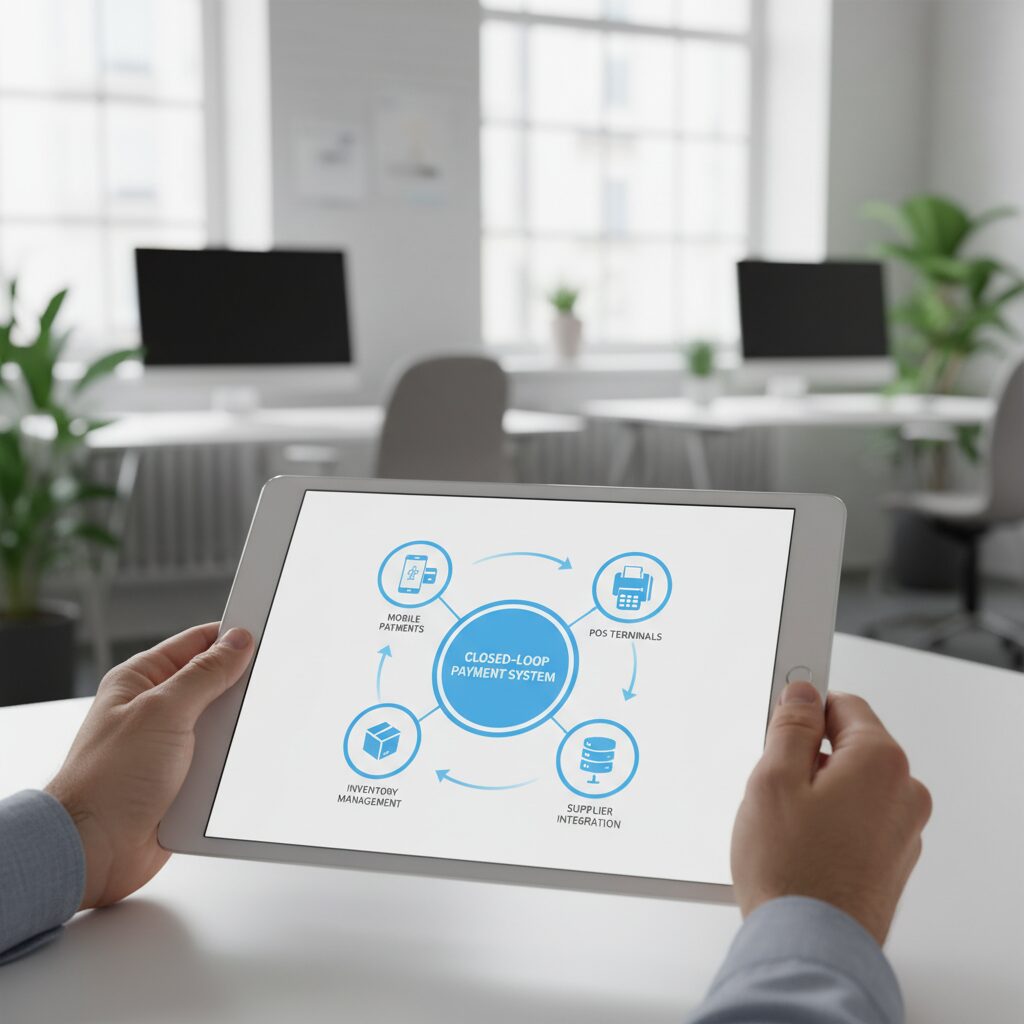
The Solution: A Canteen Management System for South African Businesses
A modern canteen management system, often called corporate catering software, replaces these outdated processes with a sophisticated, integrated digital ecosystem. This “closed-loop” network ensures every transaction is captured, tracked, and reported in real time.
Defining the Closed-Loop System
A closed-loop system is a self-contained payment and management platform designed for your corporate environment. Key components include:
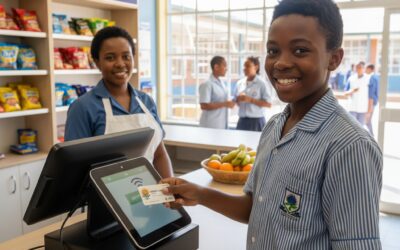
- Cashless Payment Methods: Employees transact using their company ID card, a mobile application, or a QR code linked to a pre-funded account, which can be funded by the employee or subsidised by the organisation.
- Integrated Point of Sale (POS): Every item is processed through a modern POS terminal, capturing item-level data for every transaction.
- Centralised Inventory Management: Each sale automatically deducts ingredients from inventory based on pre-loaded recipes, providing a live, accurate view of stock levels.
- Real-Time Reporting Dashboard: All data is aggregated on a central dashboard, where managers can monitor live sales, stock variances, and performance KPIs from any authorised device.
Eliminating Inventory Leakage Through Integrated Controls
By digitising sales and integrating them with stock management, a cashless canteen management system provides the visibility required to drastically reduce shrinkage. With every transaction tied to a specific item and employee, you can:
- Track Daily Variance: Compare your theoretical stock (what you should have based on sales data) with your actual physical stock daily. This enables you to identify and rectify over-portioning or theft issues within 24 hours, not weeks later. Industry analysis from FlashQuotes on catering challenges indicates that implementing digital tools can reduce food waste by up to 30%.
- Enforce Standardised Recipes: Link every menu item to a digital recipe to ensure consistent portioning and accurate food costing across all shifts.
- Ensure Full Accountability: Unauthorised complimentary items and unrecorded sales become impossible. All discounts, staff meals, and comps must be processed through the canteen management system with a specific tender type, creating a clear and auditable transaction record.
Eradicating Cash-Handling Costs and Risks
Removing physical cash from the canteen environment provides immediate financial and security benefits. As noted by experts at KTCHN Rebel, the drive to digitise is a major force in the food service industry, primarily because it solves these core problems. A cashless canteen management system allows you to:
- Remove Cash Tills Entirely: Drastically reduce labour costs associated with manual cash management.
- Lower Security Overheads: Eliminate the need for cash-in-transit services and reduce your organisation’s risk profile for insurance purposes.
- Prevent Theft and Robbery: Create a safer environment for your staff and customers by removing the primary target for criminal activity.

From Reactive Analysis to Proactive Management: Gaining Daily Operational Insight
The most significant advantage of an integrated canteen management system is the strategic shift from backward-looking reports to forward-looking, data-driven decisions.
Real-Time Data for Immediate Decision-Making
With a live data dashboard, you no longer need to wait for end-of-week reports. You can monitor sales figures, transaction volumes, and average spend in real time. This empowers managers to make immediate, impactful decisions, such as deploying additional staff to reduce queues or preparing more of a high-demand item to maximise revenue.
Strategic Menu Engineering with Product Mix Data
Granular, item-level data provides a clear picture of product performance. By combining sales data with food cost information, you can engineer your menu for maximum profitability.
- Identify and promote “star” products (high-popularity, high-margin items).
- Re-evaluate or re-engineer “puzzle” products (low-popularity, high-margin items).
- Eliminate “dog” products (low-popularity, low-margin items) that consume inventory and generate waste.
Precise Subsidy and Cost-Centre Management
For organisations that subsidise employee meals, a closed-loop corporate catering software provides complete financial control and transparency. You can implement complex subsidy rules (e.g., different levels for different employee grades or shifts) and track the exact cost automatically. All spend can be allocated directly to the correct corporate cost centres, providing the finance department with accurate, timely reports.
If your organisation also manages payroll-linked staff purchases, meal allowances, or multi-wallet employee spending structures, you can explore our guide: Employee Benefits Administration: A Complete Guide to Payroll Linked Staff Purchases for more insights.
A Framework for Successful Implementation
Transitioning to a cashless canteen management system is a strategic project that delivers a clear and measurable return on investment. A successful implementation focuses on three key areas:
- Select the Right Corporate Catering Software: Choose a solution that combines robust POS terminals, flexible cashless payment options, and a powerful back-end platform for inventory management and real-time reporting.
- Redesign Operational Processes: Update your standard operating procedures (SOPs) for all relevant functions, including waste logging, staff meal processing, and daily reconciliation.
- Train Your Team: Ensure all front-of-house and kitchen staff are thoroughly trained on the new canteen management system to guarantee recipe adherence, accurate transaction processing, and proper use of management functions.
By moving beyond the operational bottlenecks of cash and manual processes, you transform the corporate canteen from an unpredictable cost centre into a highly efficient, data-driven operation. You gain the control and insight needed not only to reduce costs but also to enhance the service experience for all employees.
A Simpler Way to Manage Payments and Operations
Relying on separate tools to manage inventory, track staff credits, and process kitchen orders usually means balancing multiple systems that simply refuse to talk to each other. When your on-site dining network relies on disconnected setups, your facility loses valuable hours to manual administration while critical daily data falls through the cracks.True control over your food cost margins happens when your payment network and operational backend live in a single ecosystem.
This is exactly where Eezipay fits in. We combine robust corporate catering software with intelligent, cashless network tools to transform your on-site counter into a secure, completely transparent environment.
By moving away from open-market cash risk and unvouched processing, our platform upgrades your daily operations across three critical areas:
- Closed-Loop Counter Networks: We entirely remove physical currency from your dining halls. Staff and contract teams transact swiftly using secure company ID cards or digital profiles linked to pre-funded accounts, instantly cutting down cash-handling security risks.
- Frictionless Payment Hardware: Built specifically for high-volume service environments, our Android smart mobile payment terminal range runs your point-of-sale layer smoothly. Devices like the MPT3 handle high-speed, contactless transactions with zero hassle, allowing your teams to process busy lunch-hour lines faster.
- Live Dashboard Control: Every single tap updates your central ledger in real time. Your facilities management team gains instant access to item-level data, product mix analysis, and direct cost-centre tracking to protect your bottom line from shrinkage.
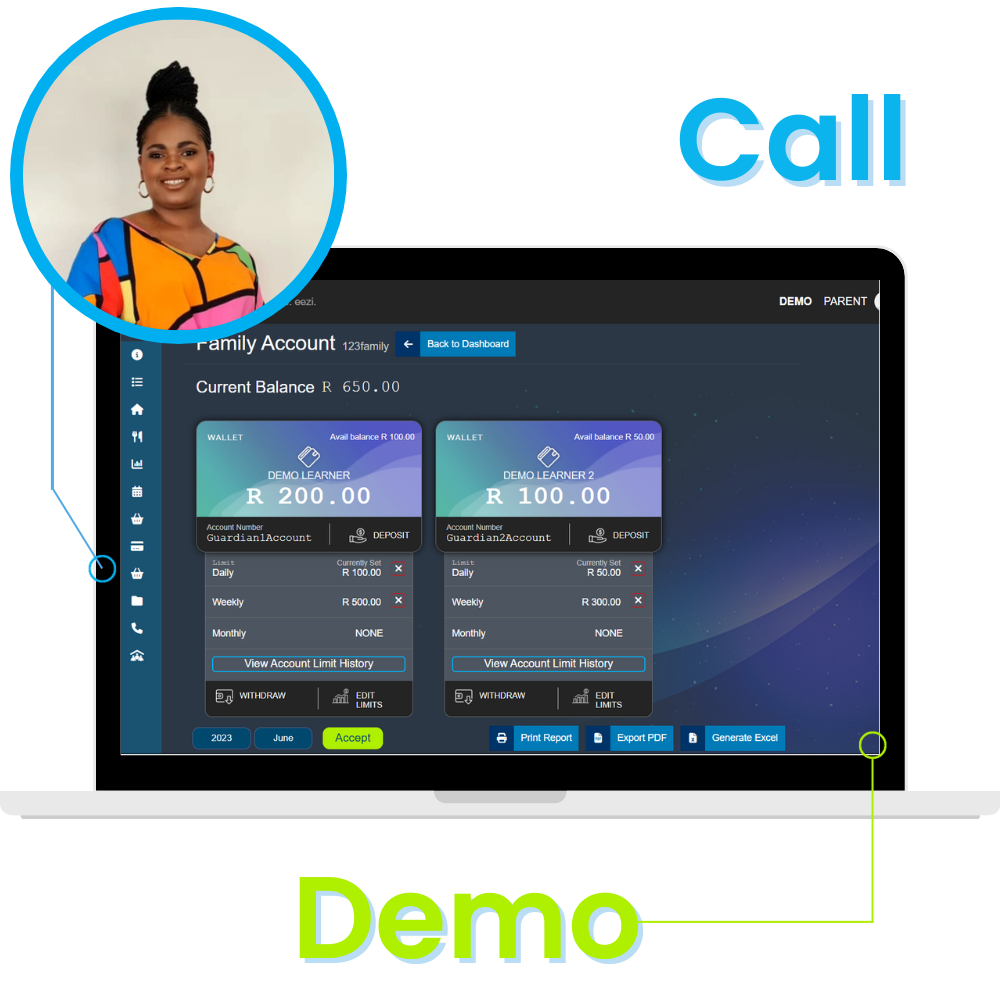
If you are ready to move past lagging spreadsheet updates and want to see how an integrated canteen management system can safeguard your operational budget, you can book a 15-minute demo call with our team today to look at your specific facility requirements.
Conclusion
A modern canteen management system does far more than digitise transactions. It gives facilities and catering teams the clarity needed to manage daily operations with greater consistency, stronger financial oversight, and less administrative friction. When every part of your dining environment works together in one connected ecosystem, it becomes far easier to maintain service standards while keeping costs under control.
For organisations looking to modernise their on-site catering environment, the right corporate catering software creates a smarter foundation for long-term operational efficiency. If you would like to explore what this could look like within your facility, the Eezipay team is available to discuss your operational requirements and future goals.