
Managing an employer funded meal allowance should feel like a straightforward perk, but for many HR teams, it quickly turns into an administrative nightmare of lost receipts and misused funds. We have a proven framework to turn this headache into a streamlined, highly controlled system that genuinely supports your staff. This guide reveals the exact models and policy controls needed to build a restricted fringe benefit meal voucher program that eliminates policy leakage and simplifies tax reporting for your organization.
Read on to discover how to transform your daily lunch subsidies into a measurable, strategic asset.

The Problem with Unrestricted Meal Stipends
Disbursing a cash stipend or managing manual expense claims may appear simple, but this approach often presents considerable operational challenges. HR and finance teams are tasked with reconciling receipts, manually processing claims, and validating ambiguous expenditures.
Without defined parameters, funds intended for nutritious work-day meals can be diverted to non-work-related expenses such as personal groceries or family takeaways. This “policy leakage” not only undermines the program’s primary objective of enhancing workplace welfare but also complicates financial reporting and tax compliance. A structured, restricted-use program mitigates these challenges by design.

The Strategic Goals of an Employer Funded Meal Allowance
Moving to a restricted model turns a basic cash payout into a highly effective employer funded meal allowance. Instead of just handing out a general perk, you are building a practical program that actively improves workplace welfare through clear and measurable goals.
Ensuring True Nutritional Benefit
At its core, the goal is to guarantee your investment directly supports employee wellness. By limiting funds to specific food vendors or the office canteen, you ensure the employer funded meal allowance is spent exactly as intended. It provides the daily nutrition that keeps your team energized and productive, stopping the benefit from simply acting as an untracked cash bonus.
Strengthening In-Office Culture and Collaboration
A strategically designed meal program can be a powerful driver for in-office attendance. When employees dine together on-site, it fosters informal collaboration, strengthens team cohesion, and builds a more dynamic corporate culture. According to research from Fooda, structured meal programs improve productivity by keeping employees on-site during their breaks.
Maintaining Clean Reporting and Tax Compliance
One of the biggest advantages of a restricted-use system is the clear, real-time data it provides. Because the system automatically logs and tracks every transaction, your finance team gets accurate, ready-to-use reports. This takes the headache out of expense reconciliation and ensures your fringe benefit meal voucher program stays perfectly compliant with local tax laws.
3 Proven Models for Structuring Your Restricted Meal Program
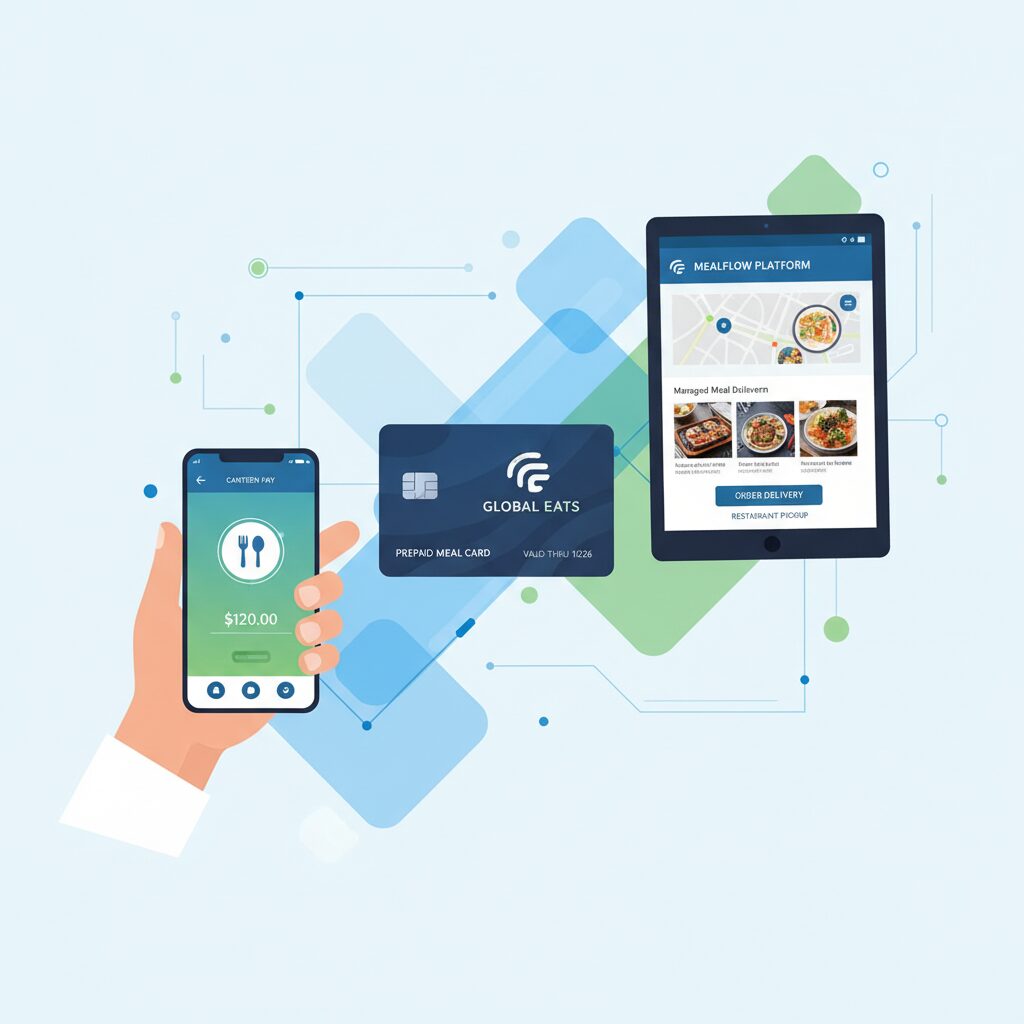
Solutions must be tailored to organizational needs. The optimal model depends on your company’s scale, culture, and access to on-site dining facilities. Here are three effective models for implementing a controlled fringe benefit meal voucher system.
Model 1: The On-Site Canteen Wallet (Closed-Loop System)
This is the most controlled and streamlined model, ideal for organizations with an established staff canteen.
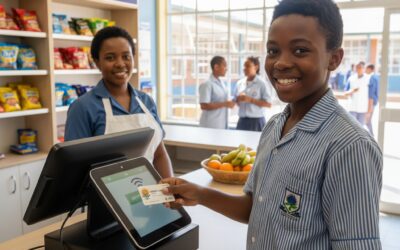
- How it works: Each employee is issued a digital wallet, typically integrated with their employee ID card or a mobile application. HR or payroll allocates a daily or monthly meal allowance to this wallet. The balance can only be redeemed at point-of-sale (POS) terminals within the designated on-site canteen.
- Best for: Companies with a central office and a dedicated on-site food services provider.
- Pros: Absolute control over expenditure, effortless reporting, and effective promotion of an on-site community.
- Cons: Unsuitable for remote or hybrid workforces; requires technical integration with your canteen’s POS system.
Model 2: The Vendor-Locked Digital Card (Targeted Flexibility)
This model offers a balance of control and flexibility, making it an effective solution for businesses without a central canteen or those supporting a hybrid workforce.
- How it works: Employees receive a prepaid physical or virtual card. While technically an “open-loop” card, it is restricted by the issuer to function only at approved vendors. You can configure it by Merchant Category Code (MCC) to permit transactions only at “Restaurants” or “Eating Places,” and further refine it with a specific whitelist of pre-approved local cafes and restaurants.
- Best for: Hybrid companies or those wishing to support a curated network of local, healthy food vendors.
- Pros: Provides employee choice while maintaining stringent control over fund allocation. Can be tailored to include health-focused partners.
- Cons: MCC restrictions may have limitations, as some vendors can be miscategorised. Requires precise configuration and coordination between HR and finance departments.
Model 3: The Managed Meal Platform (Third-Party Solution)
For a comprehensive, end-to-end solution, you can partner with a third-party service that manages the entire meal program.
- How it works: You can partner with a managed delivery platform like Uber Eats for Business or a local corporate provider such as Eatfresh. These services offer a central administrative dashboard where your HR team can easily set budgets, define policy rules, and manage approved vendors. Employees simply order their food through the app, and the system restricts delivery directly to your corporate address. This transforms a standard lunch perk into a highly controlled fringe benefit meal voucher program.
- Best for: Organizations of any size seeking a turnkey, managed solution that minimizes administrative overhead.
- Pros: Comprehensive reporting capabilities, seamless scalability across multiple office locations, and management of the entire vendor ecosystem.
- Cons: Incurs platform and delivery fees; vendor selection is limited to the platform’s network.
Key Policy Controls to Implement
Regardless of the model selected, a successful program is built on the foundation of a clear, robust policy framework.
Defining Clear Eligibility and Occasions
For your program to work smoothly, the policy must clearly outline exactly who qualifies for the employer funded meal allowance and when they are allowed to use it.
- Eligibility: Is the benefit for all full-time employees, or exclusively for those working on-site?
- Occasion: Does it apply only on scheduled office days? Is it designated for employees on shifts exceeding a certain duration, such as eight hours, or working past a specific time, like 7 PM?
Setting Spending Caps and Frequency
To manage costs and ensure equity, establish clear financial parameters. Based on market data, a typical monthly allowance ranges from approximately R900 – R3,600 per employee per month.
- Per-Meal Caps: Implement a reasonable limit per meal (e.g., R150 for lunch).
- Frequency: Set clear rules on whether the funds refresh on a daily, weekly, or monthly basis. It is also smart to stop unused balances from rolling over to the next period. This simple control keeps your fringe benefit meal voucher focused on providing actual nutrition rather than turning into an alternative savings account.
Establishing Usage Restrictions
Technology is the most effective tool for enforcement. Utilize your chosen system’s features to establish enforceable parameters.
- Time Windows: Restrict transactions to designated lunch hours (e.g., 11:30 AM to 2:00 PM).
- Location Locks: For delivery platforms, ensure the delivery address is geo-locked to the office.
- Item Exclusions: Collaborate with your platform or vendors to explicitly prohibit the purchase of alcohol or gift cards.
Maximising Welfare: It’s More Than Just ‘Free Food’
A well-planned food program does a lot more than just cover the cost of lunch. It actively builds a healthier and more connected workplace. To get the most out of your setup, focus on encouraging good nutrition and bringing people together. This approach is a key part of managing your overall employee benefits strategy effectively. To understand how to integrate this specific perk into a wider, automated system, we highly recommend reading our guide: Employee Benefits Administration: A Complete Guide to Payroll Linked Staff Purchases. It breaks down exactly how to unify subsidised meals, uniform budgets, and other staff allowances into one seamless digital wallet.
Work with your canteen or local vendors to provide healthy, balanced meals. You might even consider adjusting the subsidy so the most nutritious options are also the most affordable for your staff. Beyond daily nutrition, you can use your employer funded meal allowance to bring the team together. Scheduling regular group lunches or catered all-hands meetings helps drive the informal teamwork that builds a strong company culture. As the benefits experts at PeopleKeep point out, you can structure these programs to match your specific goals, whether that means covering everyday lunches or funding special events.
A simpler way to manage payments and operations
If your goal is to implement a structured employer funded meal allowance, basic cash stipends or manual expense claims might seem easy at first. But once you need to enforce strict rules on where the money is spent, automate budget resets, and generate clean tax reports, you will get much better results with a system that combines your payment hardware and management software in one place.
That is exactly where Eezipay fits in. We provide the integrated Cashless Ecosystems needed to run your fringe benefit meal voucher program flawlessly. Your staff can redeem their daily allowance using our smart Mobile Payment Terminals, like the MPT3, which processes transactions instantly on a vibrant 5.5-inch touchscreen. Meanwhile, your HR and finance teams get complete visibility and automated compliance tracking from a central dashboard, fully supported by our local Stellenbosch-based team.
- Explore our software: See how our Cashless Ecosystems streamline workplace benefits.
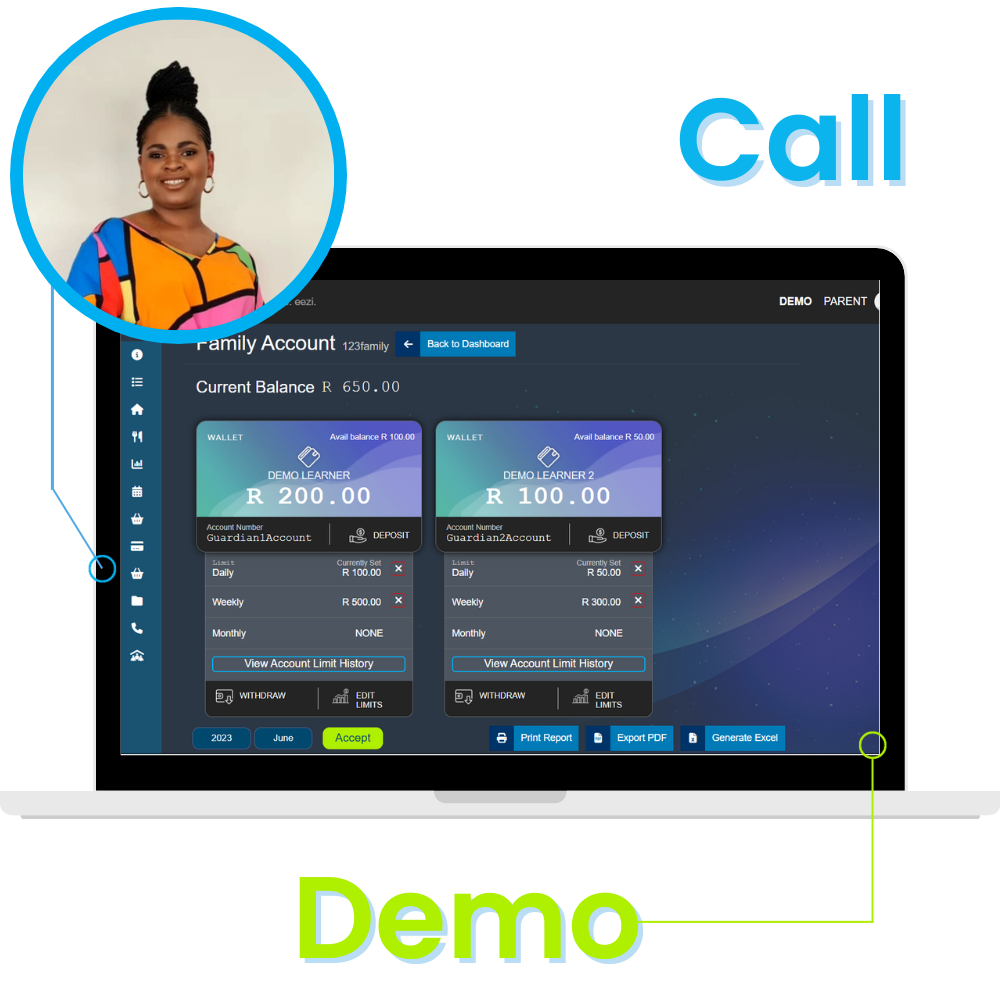
- Speak to the team: Book a 15-minute demo call to discuss your specific setup.
A Strategic Tool for a Modern Workplace
By structuring your employer-funded meal allowance with clear restrictions and strategic objectives, you transform it from an operational challenge into a highly effective workplace benefit. A well-designed program with integrated, transparent reporting provides complete control over your investment, ensures compliance, and directly contributes to the health, engagement, and productivity of your team. It delivers a clear return on investment for both the welfare of your staff and your company’s bottom line.
If you are tired of managing messy manual expense claims and ready to streamline your corporate rewards, explore Eezipay today to see exactly how our cashless ecosystems can do the heavy lifting for you.