Affordable Student Accommodation in Cape Town: 2026 Guide to the Best Value Spots
Finding affordable student accommodation in Cape Town is often the biggest financial hurdle for students heading to this world-class educational hub. While the city boasts prestigious universities and a vibrant culture, its status as South Africa’s most expensive property market requires you to be strategic. If you are searching for cheap student accommodation in Cape Town that doesn’t compromise on safety or study needs, you need to look beyond the obvious choices. This guide provides actionable strategies—from exploring the Northern Suburbs to understanding all-inclusive models—to help you navigate the rental landscape and optimize your budget.
Where to Find Affordable Student Accommodation in Cape Town
One of the most effective strategies for reducing monthly rental costs is to expand the search perimeter beyond the immediate vicinity of central campuses.
The Northern Suburbs Advantage
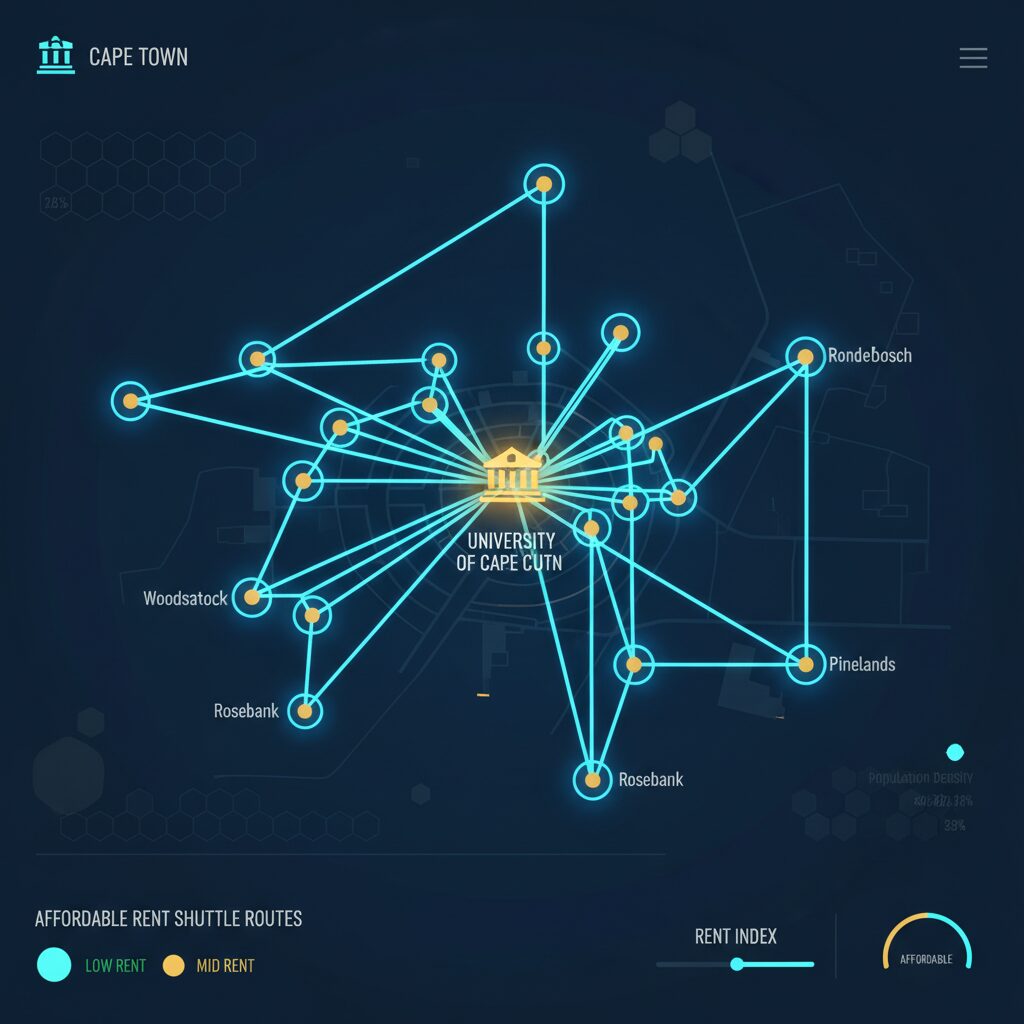
For those seeking affordable student accommodation in Cape Town, consider the northern suburbs such as Bellville, Kempenville, and Durbanville. These areas typically offer 15–25% lower rental rates compared to prime central locations like Rondebosch or the City Bowl. While further from some universities, many providers in these areas, like Study & Stay Cape Town, offer daily shuttle services to major institutions. This integrated service model can eliminate or substantially reduce separate transport costs, making the overall accommodation package a highly economical solution.
Explore Student-Friendly Neighbourhoods
Beyond the northern suburbs, other areas like Mowbray, Observatory, and Woodstock are recognized for their student-centric communities and offer comparatively lower rental rates than prime city-center zones. Opting for accommodation in these neighbourhoods can lead to a 10–20% saving. When evaluating your options, it is essential to factor travel time and transportation expenditures into your total cost analysis.
Shared Living vs. Private Space: The Cost of Privacy
The decision between shared and private living arrangements is a primary determinant of total accommodation expenditure.
Pricing Differential
Shared rooms in Cape Town can cost between R3,800 and R5,150 per month, while a single room typically ranges from R4,500 to R6,360 per month. This represents a 15–25% premium for private occupancy. For students operating on a constrained budget, shared living is often the most effective way to secure cheap student accommodation in Cape Town. Beyond the financial benefit, shared living can also facilitate the development of a valuable social network, which is beneficial when integrating into a new city and academic environment.
Many student accommodation providers now offer all-inclusive packages, which represent a prudent financial decision.
Bundled Services
Integrated accommodation providers such as My Student House and Study & Stay bundle essential services—including high-speed Wi-Fi, laundry facilities, 24/7 security, and shuttle transport—into a single monthly fee. This consolidated billing model simplifies budgeting and eliminates the unbudgeted variable costs associated with self-catering apartments, where utilities can contribute an additional R500 or more to monthly expenses. A comprehensive comparison of the total cost of ownership for all-inclusive versus self-catering alternatives is recommended, factoring in all potential utility and transport expenses.
NSFAS Accreditation: A Transformative Financial Solution
For South African students, National Student Financial Aid Scheme (NSFAS) accreditation can be a transformative financial solution.
Full Rent Coverage
If you qualify for NSFAS funding, selecting an NSFAS-accredited accommodation provider can result in your rent being fully covered by your allowance. Facilities like certain My Student House locations are accredited and can significantly reduce or eliminate the financial burden of rent. It is critical to verify if a residence is NSFAS-accredited before committing if you are an eligible student.
Finding the Cheapest Student Accommodation in Cape Town
Even within the competitive property market, finding cheap student accommodation in Cape Town is possible for highly budget-conscious students.
Seeking the Lowest Rates
For example, some shared rooms in My Student House locations have published rates as low as R3,800 per month, although it is necessary to budget an additional R500 for electricity. While purpose-built student residences like Nest (from R8,390/month) and Proper Living (from R9,000/month) target budget-conscious students with modern amenities, the most economical rates are typically secured through shared living arrangements or in locations outside the central metropolitan area.
Hidden Fees & Admin Costs in Cape Town Student Accommodation
A thorough analysis of the complete fee structure for any accommodation provider is essential.
Transparent Fee Disclosure
Some providers, like My Student House, may charge a single annual membership fee (e.g., R1,000) in addition to monthly rent. Others, such as Nest and Study & Stay, advertise no undisclosed charges. Always request a transparent breakdown of all upfront and recurring fees to ensure complete financial clarity and prevent unforeseen expenditures. However, understanding fees is just the first step; knowing which property type aligns with your funding is equally critical. For a deep dive into On-Campus vs. Private options and the critical importance of NSFAS accreditation, read our comprehensive guide: Student Accommodation in South Africa: The Best 2026 Guide.
Housing Diversity and Flexibility
Cape Town offers a range of accommodation types to suit various budgets and strategic preferences:
Purpose-built residences: Typically R5,150–R9,000 per month (often providing optimal value when utilities are included).
Shared houses/apartments: R3,800–R5,500 per month (requires separate management of utility costs).
Homestays: Generally R4,000–R7,000 per month (often includes meals).
Self-catering studios: R5,000–R9,000 per month (requires budgeting an additional R500+ for utilities).
Strategic Recommendations for Budget-Conscious Students
To secure affordable student accommodation in Cape Town, implement these key recommendations:
Evaluate northern suburbs: Reduce rent by 15–25% and leverage integrated shuttle services to minimize transport expenditures.
Select shared room configurations: Achieve monthly savings of R1,000–R2,000 compared to single occupancy and benefit from a collaborative living environment.
Engage all-inclusive providers: Compare options like My Student House and Study & Stay; bundled services like Wi-Fi, security, and transport often provide superior value by consolidating expenses.
Verify NSFAS eligibility: If you qualify, choose NSFAS-accredited facilities to potentially eliminate rent costs.
Budget for utilities separately: For self-catering options, allocate a dedicated budget of R500–R1,000 for monthly utilities to manage variable expenses.
Initiate proactive planning: Demand for student accommodation in Cape Town is high. Secure your position in preferred residences as early as possible.
Choosing affordable student accommodation in Cape Town doesn’t have to be a financial burden; it simply requires a shift in strategy. By looking beyond the City Bowl, embracing shared living arrangements, and leveraging all-inclusive packages, you can find a home that fits your budget without compromising on quality. Use these data-driven insights to make a smart, informed decision today, ensuring your focus remains exactly where it should be—on your academic success.
Try Cashless Campus
Test drive Cashless Campus yourself, or book an online demo with our team.
For school administrators and bursars, staying informed about AI in education in South Africa is no longer optional. From streamlining finance operations and ensuring compliance with data protection regulations to enhancing student support services, AI has the...
The familiar clatter of coins and rustle of banknotes have long been a soundtrack to school life in South Africa. From tuck shop queues to school fee payments, cash has traditionally been king. But beneath this veneer of simplicity lies a complex and costly reality....
The educational landscape in South Africa, much like the rest of the world, is undergoing a profound transformation. Beyond the curriculum and classroom, the very operational backbone of schools and universities – particularly their financial systems – is evolving at...
Manage Cookie Consent
To provide the best experiences, we use technologies like cookies to store and/or access device information. Consenting to these technologies will allow us to process data such as browsing behavior or unique IDs on this site. Not consenting or withdrawing consent, may adversely affect certain features and functions.
Functional
Always active
The technical storage or access is strictly necessary for the legitimate purpose of enabling the use of a specific service explicitly requested by the subscriber or user, or for the sole purpose of carrying out the transmission of a communication over an electronic communications network.
Preferences
The technical storage or access is necessary for the legitimate purpose of storing preferences that are not requested by the subscriber or user.
Statistics
The technical storage or access that is used exclusively for statistical purposes.The technical storage or access that is used exclusively for anonymous statistical purposes. Without a subpoena, voluntary compliance on the part of your Internet Service Provider, or additional records from a third party, information stored or retrieved for this purpose alone cannot usually be used to identify you.
Marketing
The technical storage or access is required to create user profiles to send advertising, or to track the user on a website or across several websites for similar marketing purposes.