
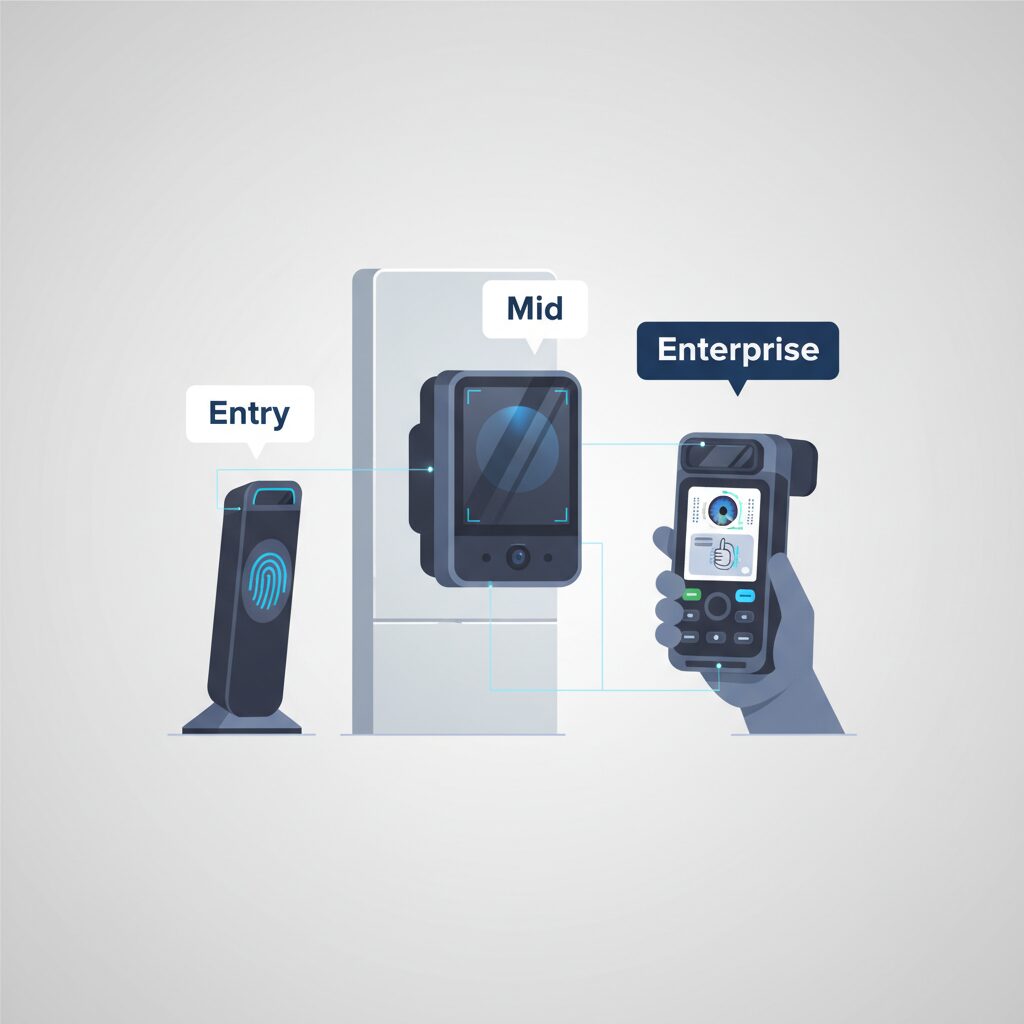
A comparison of biometric access control system price levels for Entry, Mid, and Enterprise hardware in South Africa.
Hardware vs. TCO: Understanding the Full Biometric Access Control System Price
When allocating a budget for a new system, it is crucial to evaluate beyond the initial biometric access control system price. The total cost of ownership (TCO) encompasses the initial hardware procurement, installation fees, software subscriptions, and potential maintenance or future integration costs. A solution with a lower initial cost can incur substantial long-term expenses if it requires complex installation or recurring software licensing fees.
2026 Price Breakdown: Biometric Hardware Tiers in South Africa
Hardware costs are contingent upon the biometric modality (fingerprint, facial recognition, etc.), brand, user capacity, and overall functionality. The following tiers outline the expected hardware investment, exclusive of VAT and installation.
Entry-Level Solutions: Best Options Under R5,000
For small to medium-sized businesses (SMBs), startups, or for securing internal, low-traffic access points, entry-level devices provide robust security without significant capital outlay.
- Basic Fingerprint Readers: These represent the most cost-effective solutions, with prices for reliable standalone units starting from R1,395. These devices are frequently deployed for time and attendance management and can be connected via USB to a computer for data extraction.
- Simple Facial Recognition Terminals: The accessibility of contactless facial recognition technology has increased significantly. Entry-level devices like the ZK SpeedFace V3L (Lite) are available for approximately R3,820. These terminals are an optimal solution for professional offices, clinics, or any environment where hygiene is a primary concern.
Mid-Range Systems (R5,000 – R20,000)
Expanding organizations or those requiring enhanced functionality will find suitable solutions within this investment tier. These systems provide greater user capacity, more robust construction, and advanced connectivity options.
- Advanced Fingerprint & RFID Readers: Devices that integrate fingerprint scanning with RFID card or tag access typically fall in the R7,000 to R10,000 range. Models like the ZKTeco IN05 offer dual authentication methods, making them highly versatile for environments such as warehouses and medium-sized enterprises.
- Commercial Facial Recognition: Advanced facial recognition scanners from brands like Hikvision can be sourced for approximately R5,200. For a comprehensive solution, a bundled kit integrating a facial recognition terminal with temperature screening can be procured for around R11,995.
Enterprise-Grade & Specialized Systems (R20,000+)
For large corporations, manufacturing facilities, or high-security zones, enterprise-grade systems are a prerequisite. These devices feature superior processing capabilities, extensive user capacities, and advanced functionalities for complex system integrations.
- High-Capacity Fingerprint Systems: A premium commercial-grade fingerprint reader, such as the Suprema BioStation A2, supports up to 500,000 users and performs 150,000 matches per second, representing an investment from R21,761.
- Portable Multimodal Terminals: For industries such as construction or events management, portable terminals are an essential operational tool. Devices like the ZK Horus H1, which includes NFC and anti-passback functions, are priced from R20,376.
- Outdoor & Rugged Terminals: Biometric readers engineered for external deployment with IP65 weather-proof ratings can range from R27,000 to over R30,000.

Installation & Software: Hidden Factors in the Biometric Access Control System Price
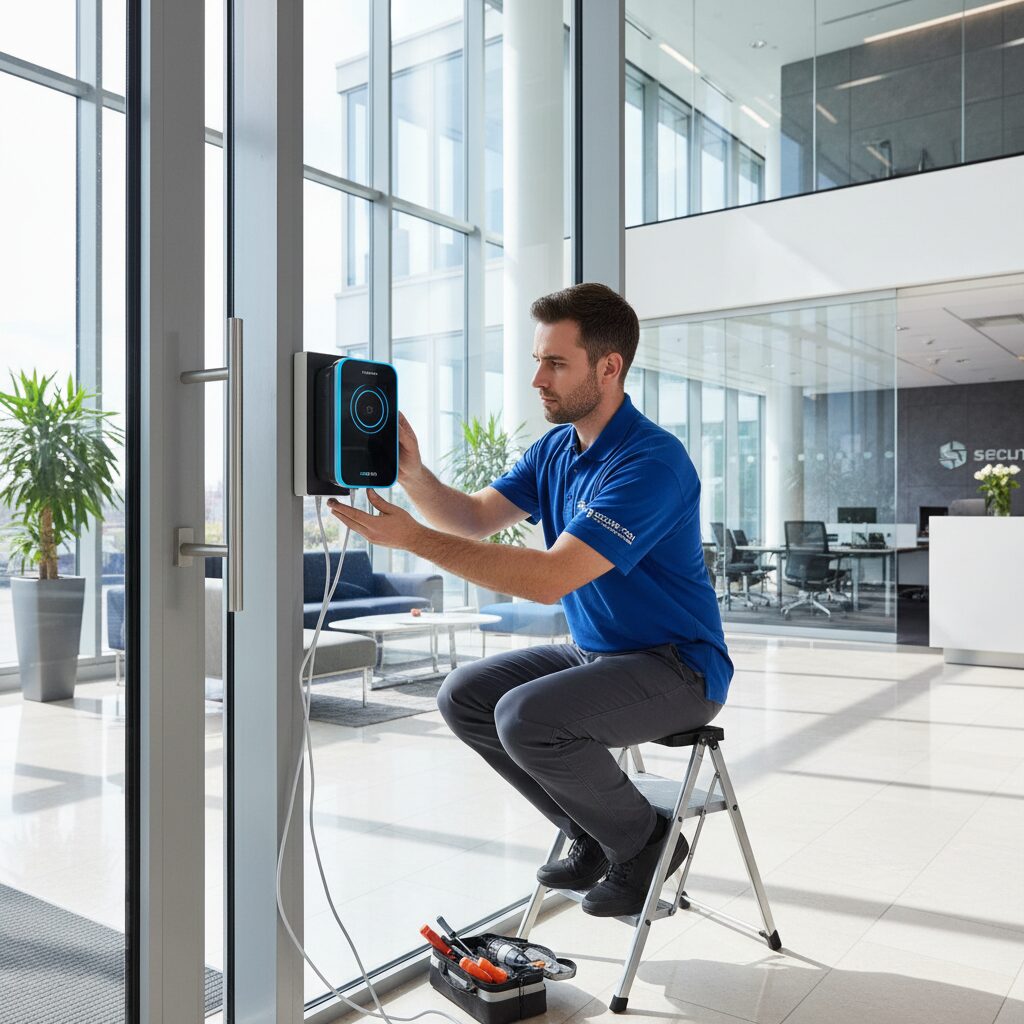
The hardware investment is only one component of the total biometric access control system price. Installation and software represent two additional primary cost centres that must be incorporated into your financial planning.
Installation Cost Factors
Installation costs are subject to variation and depend on the complexity of the site and the chosen system. Securing a detailed quotation from your installation partner is imperative.
- Number of Doors: The more access points you need to secure, the higher the installation cost.
- Wiring & Cabling: The deployment of network and power infrastructure to each reader can constitute a significant portion of the budget, particularly in older buildings or across large facilities.
- Locking Hardware: The type of electronic lock required (e.g., magnetic lock, strike lock) will influence the total cost.
- Existing Infrastructure: While some existing wiring from a legacy system may be reusable, integrating new technology with older infrastructure can introduce complexity and additional cost. Some suppliers, like DIY Protect, offer systems designed for simplified deployment to reduce professional installation fees.
As a general guideline, professional installation for a single access point typically starts from R1,500 – R3,000, with costs escalating based on the aforementioned factors.
Software & Integration Fees
Modern biometric platforms rely on management software to administer users, define access permissions, and generate reports. While some manufacturers provide basic software at no additional cost, advanced features or enterprise-level management often require a one-time license fee or an annual subscription. Integration with other business systems, such as your payroll or HR platform, will typically incur additional professional service fees.
Key Factors Influencing Total System Cost
To summarize, the total cost of your biometric access control system will be determined by:
- Biometric Modality: Facial recognition systems typically command a higher investment than fingerprint-based solutions.
- User Capacity: Devices engineered for a higher number of users command a higher price point.
- Number of Secure Access Points: The total cost scales with the number of doors or entry points requiring control.
- Brand and Reliability: Established brands like ZKTeco, Suprema, and Hikvision may have a higher initial cost but deliver superior reliability and long-term support.
- Software and Integration Needs: The requirement for advanced reporting, third-party system integration, or multi-site management will increase the overall investment.
Calculating Return on Investment (ROI)
The primary motivation for investing in biometrics is the significant and measurable return on investment (ROI) these systems deliver. According to local specialist CTSTime, the financial benefits extend far beyond enhanced physical security.
ROI is principally achieved through the elimination of payroll inaccuracies and fraud. “Buddy clocking,” where one employee clocks in for another, is rendered impossible. This functionality ensures accurate payment for hours worked, significantly reducing unwarranted overtime claims and delivering substantial annual savings. Furthermore, the automation of time and attendance management liberates HR personnel from manual data administration, enabling them to focus on strategic, high-value initiatives.
Selecting the Optimal System for Your Organization
Let’s wrap this up.
Selecting the right security setup for your business doesn’t have to be a headache. But here is the truth:
If you focus only on the sticker price of the hardware, you might end up paying more in the long run.
That is why it is critical to look at the full picture—from installation fees to software subscriptions—when evaluating the total biometric access control system price.
It really comes down to this:
Are you looking for a simple door lock, or a comprehensive time and attendance solution? Once you define that goal, the budget becomes much clearer.
Ready to explore the specific technologies?
We have barely scratched the surface of the different readers and scanners available. If you want to dive deeper into the specific tech stacks that fit your budget, check out our brand new post: