The Strategic Advantages of an Automated Time and Attendance System
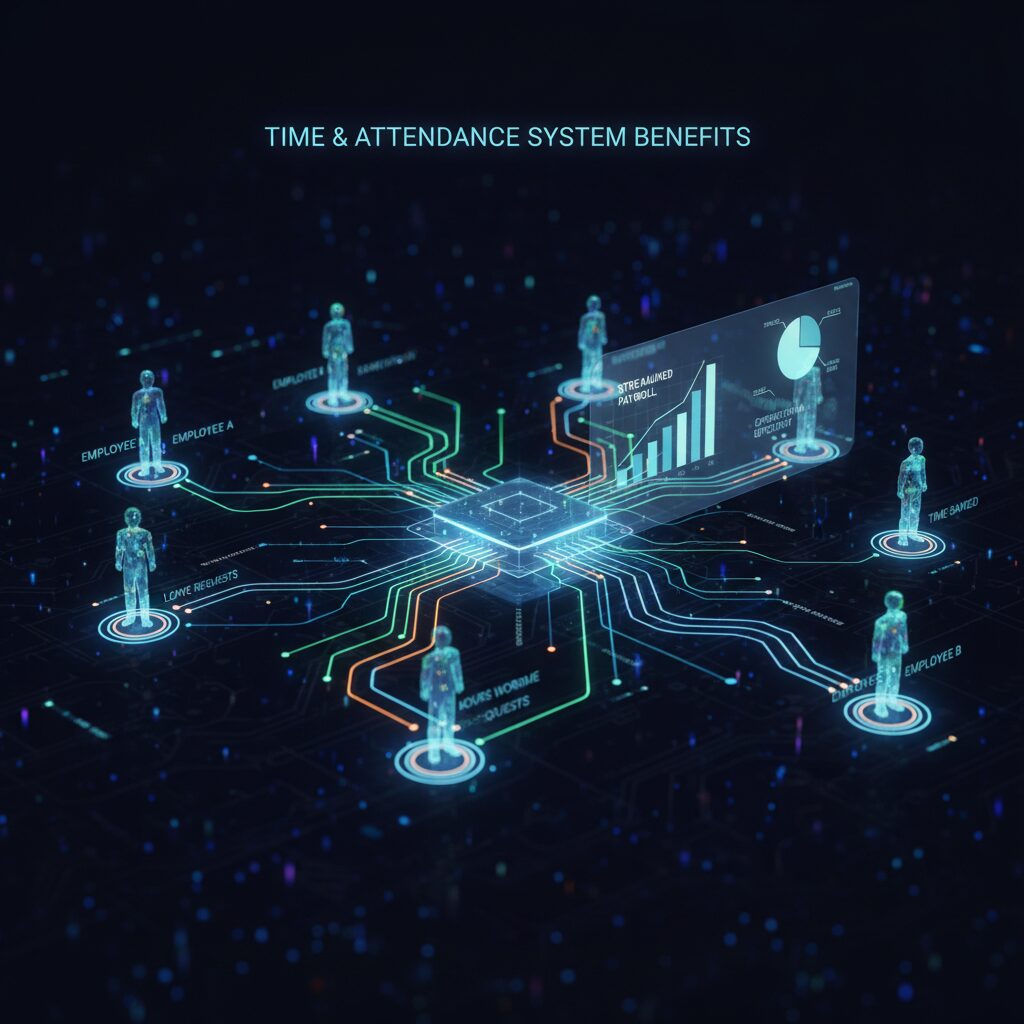
Organisations that migrate to an automated system realise immediate and tangible benefits, specifically regarding compliance with South African labour laws.
Enhance Accuracy and Mitigate CCMA Risks
Paper timesheets and manual registers are susceptible to human error, legibility issues, and time theft practices such as “buddy punching”—where one employee records time for another. In the South African context, these discrepancies don’t just lose money; they create huge liabilities during labour disputes. Implementing a digital employee clock in system ensures every time entry is accurately captured and securely archived. This creates an indisputable, timestamped record that protects your business during CCMA hearings and ensures you remain compliant with the POPI Act regarding employee data storage.
Streamline Payroll Administration
The manual calculation of work hours, overtime, and leave balances is a laborious task prone to mistakes, especially when dealing with complex BCEA overtime rates (such as Sunday or Public Holiday pay). A reliable clocking system for small business environments performs these calculations instantly, eliminating errors and significantly reducing the administrative hours required for payroll preparation. This validated data can be seamlessly exported for integration with your existing payroll software (such as Sage or Xero), ensuring your SARS submissions are based on accurate figures.
Enable Data-Driven Labour Cost Management
An automated platform delivers real-time data on employee attendance, labour hour allocation, and overtime trends. In an economy where margins are tight, this level of visibility is crucial. It allows business owners to make strategic decisions regarding staffing levels and budget allocation, ensuring you aren’t overspending on unscheduled overtime while maintaining adequate coverage for your operations.
Available System Architectures for SMEs
For small and medium-sized enterprises (SMEs) in South Africa, affordability and reliability are primary considerations. Optimal solutions are typically cloud-based, but must be chosen with local challenges—like connectivity and power stability—in mind.
Mobile-Based Solutions for Dynamic Workforces
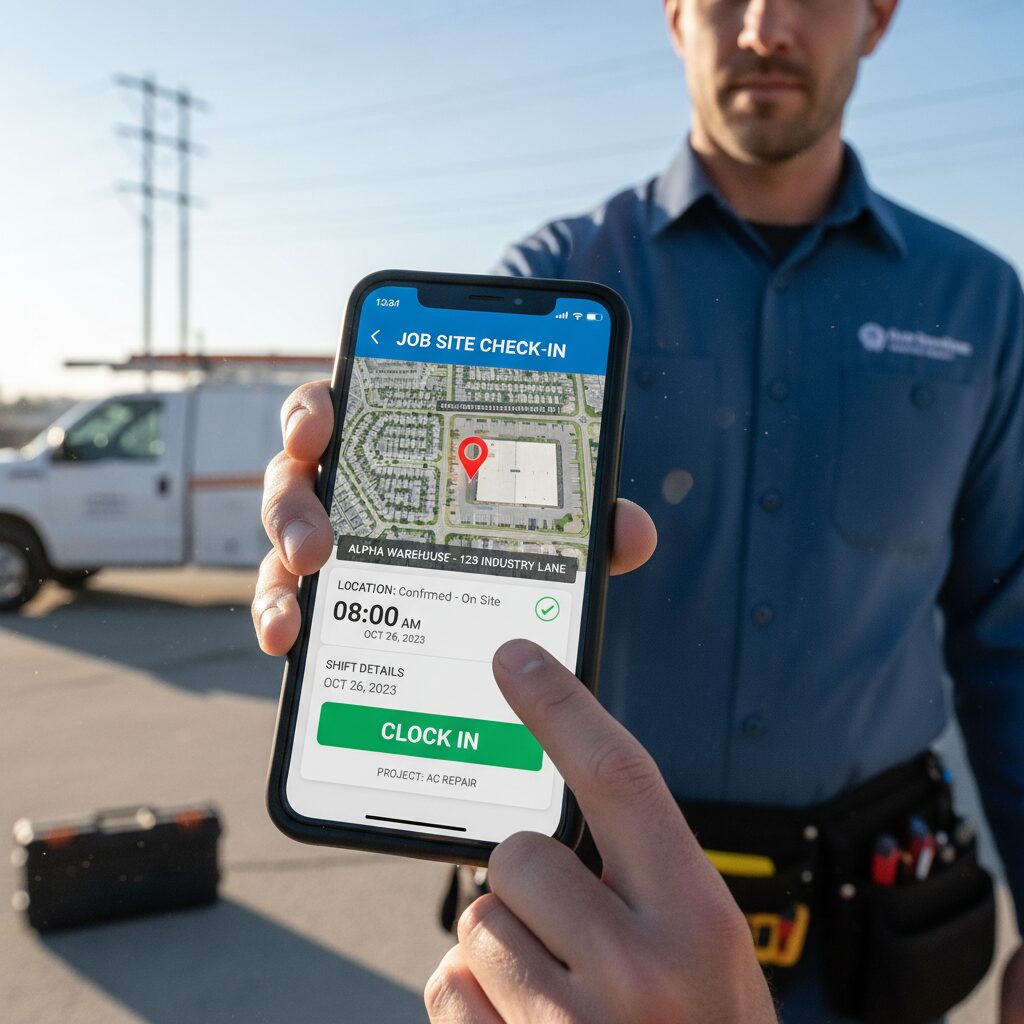
Ideal for organisations with field staff, remote teams, or employees operating across multiple sites (e.g., construction, logistics, and field sales). Employees utilise their company-issued or personal smartphones to submit time entries.
- Pros: Maximum operational flexibility, GPS verification ensures location accuracy, minimal initial investment.
- Cons: Potential reliance on employee-owned devices (BYOD policy).
Web-Based Platforms for Centralised Access
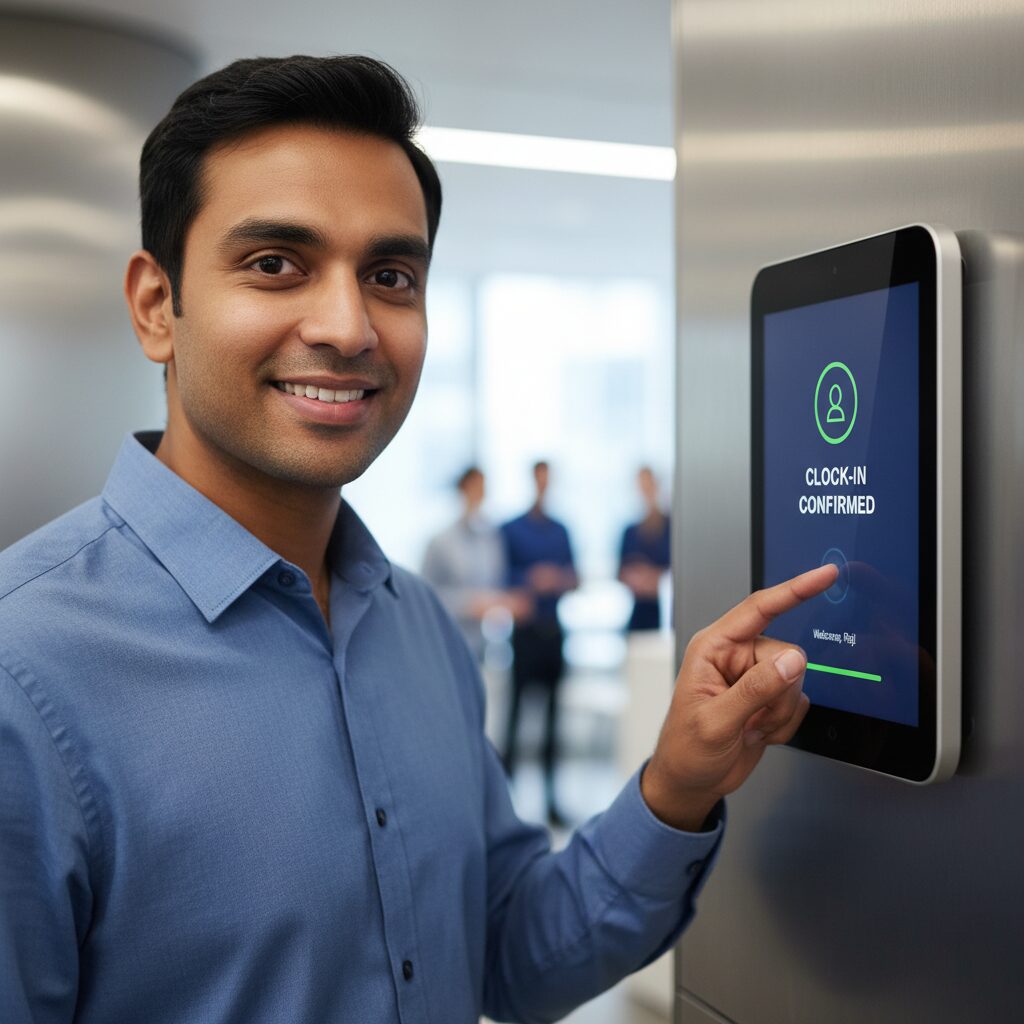
This model allows employees to record time from any authorised computer via a standard web browser. It is highly effective for office-based environments or settings where a shared terminal is practical. Many systems also offer a tablet-based “kiosk” mode.
- Pros: Leverages existing IT infrastructure, remote accessibility for authorised users, centralised administration and oversight.
- Cons: Limited utility for personnel without regular computer access.
Biometric Systems for Maximum Accountability
Although historically viewed as a higher-cost option, modern biometric systems (utilising fingerprint or facial recognition) have become increasingly accessible. They represent the industry standard for eliminating time theft and ensuring identity verification.
- Pros: Unmatched accuracy in time recording, effectively eliminates “buddy punching” and other forms of time fraud.
- Cons: May require an initial investment in hardware, though a shared tablet can serve as a cost-effective solution.
Essential Features for SME Time and Attendance Solutions
When evaluating an employee clock in system, prioritise features that address specific operational challenges and deliver measurable value.
Intuitive User Interface and Rapid Deployment
The platform must be intuitive for both administrative and end-user roles to ensure high adoption rates. A complex interface impedes user adoption and diminishes the system’s overall effectiveness. Prioritise solutions that offer streamlined, single-action time entry and a deployment process measured in minutes, not days.
GPS Location Services and Geofencing
For mobile or field-based teams, GPS tracking is an essential feature for operational oversight. It provides definitive location verification for each time entry. Geofencing is an advanced capability that creates virtual perimeters around worksites, restricting time entries to within the authorised geographic boundaries.
Integrated Leave and PTO Management
A comprehensive system integrates leave request and approval workflows directly within the platform. It automates the tracking of annual leave accruals and sick leave balances in line with the Basic Conditions of Employment Act (BCEA), eliminating the need for separate, manual record-keeping.
Streamlined Reporting and Payroll Integration
A primary objective is to streamline the payroll process. The selected solution must generate clear, detailed timesheet reports that can be exported in standard formats (e.g., PDF, CSV) for seamless transfer to accounting personnel or payroll providers. Direct API integration with payroll software offers superior efficiency. However, software is only one part of the equation; security is the other. To understand how hardware impacts your data accuracy, read our deep dive: Biometric Clocking System: The Future of Time and Attendance Systems. It explains why moving to biometrics is the smartest choice for a modern employee clock in system and why it is rapidly becoming the essential clocking system for small business owners.
Leading Cost-Effective Time and Attendance Solutions in South Africa
Numerous leading international platforms are available in the South African market, offering competitive pricing models in ZAR.
Connecteam: Comprehensive Operations Platform
Connecteam is consistently rated as a leading clocking system for small business, offering a complimentary tier for up to 10 users.
- Best For: Organisations requiring an integrated platform for multiple operational functions beyond time tracking.
- Key Features: GPS tracking, job scheduling, task management, and internal communications within a single application.
- Pricing: Complimentary for up to 10 users. Paid plans start from approximately R520/month for the first 30 users.
Clockify: Robust Free-Tier Solution
Clockify is a popular platform due to its comprehensive free tier, which supports unlimited users and time tracking.
- Best For: Freelancers and budget-conscious businesses requiring robust time tracking functionality.
- Key Features: Unlimited users on the complimentary plan, time rounding capabilities, and a kiosk station mode for tablets.
- Pricing: Core features are complimentary. Paid plans with advanced features like alerts and scheduling start at approx. R75/user/month.
Buddy Punch: Specialised for Accountability and Verification
Buddy Punch specialises in employee location and identity verification, with a strong focus on preventing time theft.
- Best For: Businesses where location and identity verification are primary operational requirements.
- Key Features: Photo verification on clock-in, GPS/Geofencing, and automated overtime alerts.
- Pricing: Plans start from approximately R450/month base fee + R80/user/month for small teams.
Homebase: Optimised for Shift-Based Industries
Homebase is engineered for the operational demands of hourly workforces, such as those in retail, hospitality, and food service, combining time tracking with advanced scheduling tools.
- Best For: Shift-based businesses that need to manage complex employee schedules.
- Key Features: Transforms any phone or tablet into a time clock, drag-and-drop schedule builder, and integrated communications for shift management.
- Pricing: Offers a robust complimentary plan for a single business location with unlimited employees.
Selecting the Optimal Solution for Your Organisation
The final selection should be guided by your organisation’s unique operational requirements.
Evaluate Your Operational Environment
Analyse your workforce deployment: is your team centralised in a single location, or distributed across multiple sites? A centralised team may be well-served by a web-based terminal, whereas a mobile workforce requires a robust mobile application with integrated GPS capabilities.
Assess Scalability and Pricing Models
Select a platform that offers scalability to accommodate future growth. While a complimentary tier for a small number of users is beneficial, it is crucial to evaluate the pricing structure for expanded user counts. Confirm that the per-user or flat-rate subscription fees align with your budgetary framework.
Prioritise Integration and Data Export Capabilities
Maximum operational efficiency is achieved when systems integrate seamlessly. A time and attendance system that integrates with your payroll or accounting platform significantly reduces administrative time and eliminates data entry errors. Always verify the available data export options and direct API integrations.
There you have it: 4 essential solutions to modernise your workforce management in South Africa.
Finding the right employee clock in system isn’t just about tracking hours—it’s about streamlining your entire payroll process and cutting unnecessary admin costs.
We hope this guide has helped you see how a dedicated clocking system for small business can secure your cash flow and reduce your workload.