Where to Place Hospital Kiosks for Maximum Patient Adoption
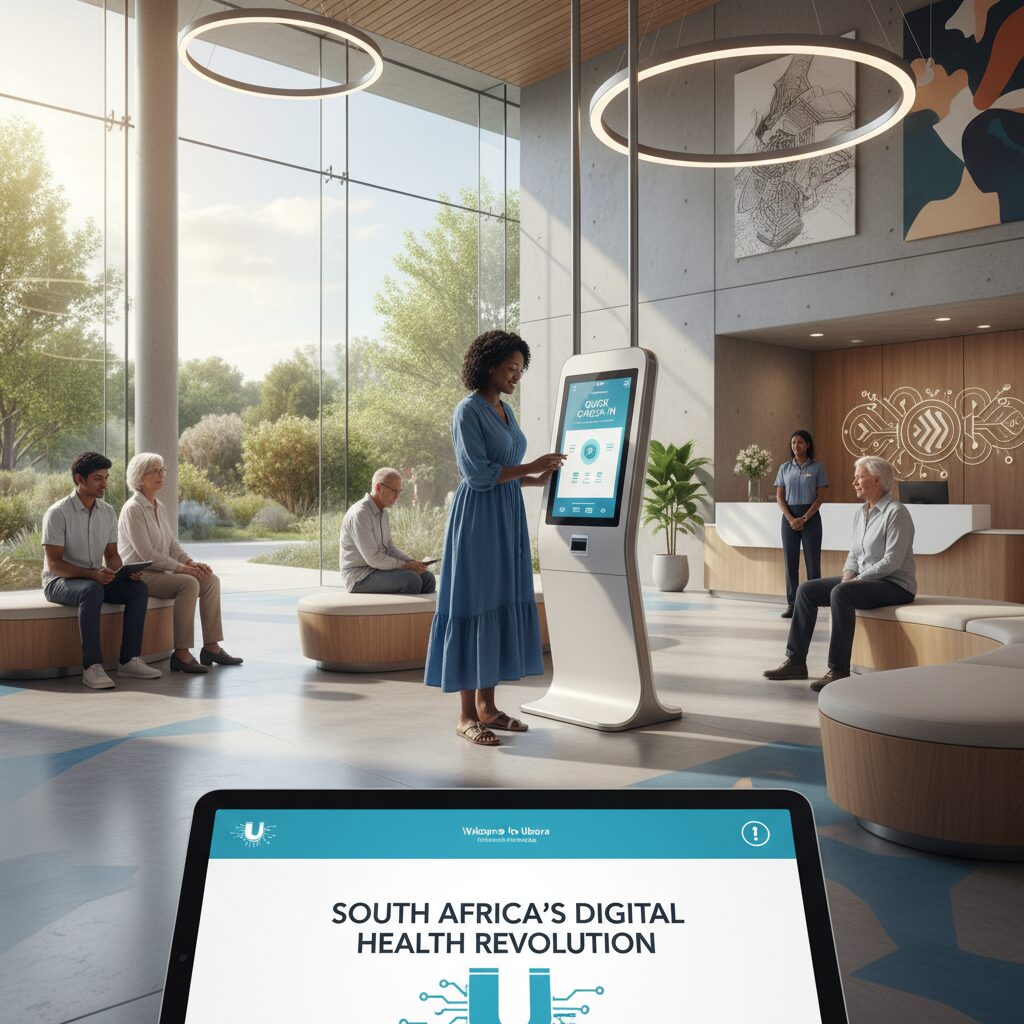
Even the most advanced hospital kiosk will fail to deliver results if it’s tucked away in a corner where nobody sees it. Finding the right physical location is about more than just finding an empty power outlet; it is the “make or break” factor that determines whether your system becomes a high-speed tool for patients or just an expensive, underutilized piece of furniture. To maximize impact and ensure high user adoption, you must place your technology exactly where the friction is highest—intercepting patients the moment they walk through your doors.
Optimizing the Reception Area: The First Step in Patient Self-Service
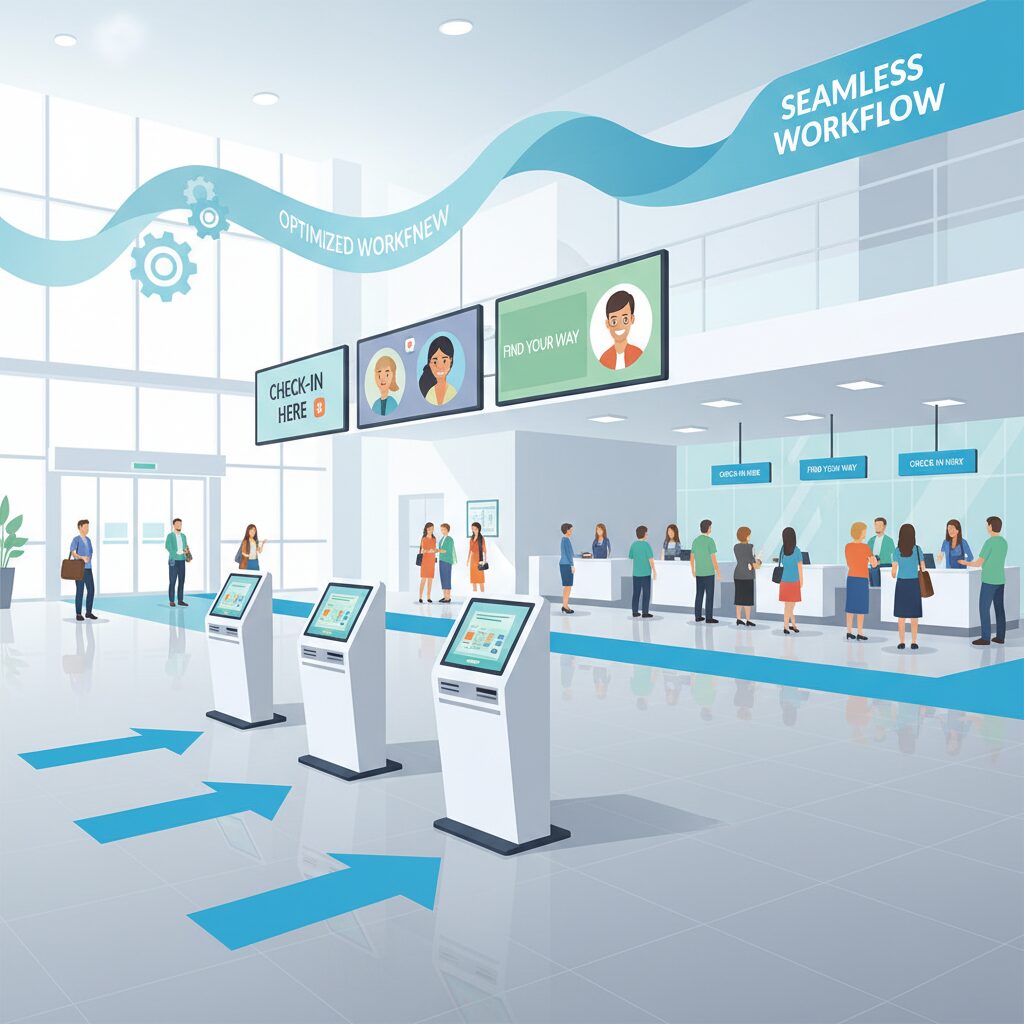
For most healthcare facilities, the main entrance or reception area is the logical deployment point. Placing kiosks here directly addresses the most significant congestion point: the appointment check-in workflow.
- Optimise Visibility: Kiosks must be highly visible and clearly designated. Position them in the direct line of sight from the facility entrance, utilising clear signage, floor decals, and digital displays to direct patients. As recommended by the Medical Group Management Association (MGMA), stationing a staff member near the kiosks during the initial rollout phase significantly enhances user adoption by providing assistance and building confidence in the new system.
- Manage Space and Privacy: Ensure sufficient physical space for patients to interact with the hospital kiosk without obstructing traffic flow. The screen orientation should be angled away from public queues to protect the privacy of personal information entry.
- Confirm Infrastructure: Prior to finalising a location, confirm reliable access to power and a stable network infrastructure, preferably a wired LAN connection for maximum uptime and security.
Beyond Reception: Deploying Kiosks in Ancillary High-Volume Zones
While reception is the primary location, high-volume facilities can achieve even greater efficiency by expanding patient self-service to other strategic zones to manage specific workflows:
- Hospital Pharmacies: A dedicated kiosk for prescription collection or repeat ordering can decouple this process from the main patient intake, reducing overall congestion. Patients can scan prescriptions, process co-payments, and receive a collection ticket.
- Billing and Accounts Departments: A patient self-service kiosk for account enquiries and bill payments in ZAR empowers patients to manage their accounts independently, reducing the reliance on clerical staff availability.
- Specialist Wings or Departments: In large hospitals, positioning check-in kiosks at the entrance to specific departments (e.g., Radiology, Pathology) can streamline internal patient flow after the primary registration is complete.
The optimal strategy involves mapping the complete patient journey to identify the critical stall points where a self-service solution can deliver the most significant operational improvements.
Selecting Hardware Engineered for High-Volume Throughput
Standard consumer-grade hardware is not engineered to withstand the demands of a high-volume clinical environment. The selected hardware must be robust, reliable, and designed for rapid, continuous operation.
Essential Hardware Components
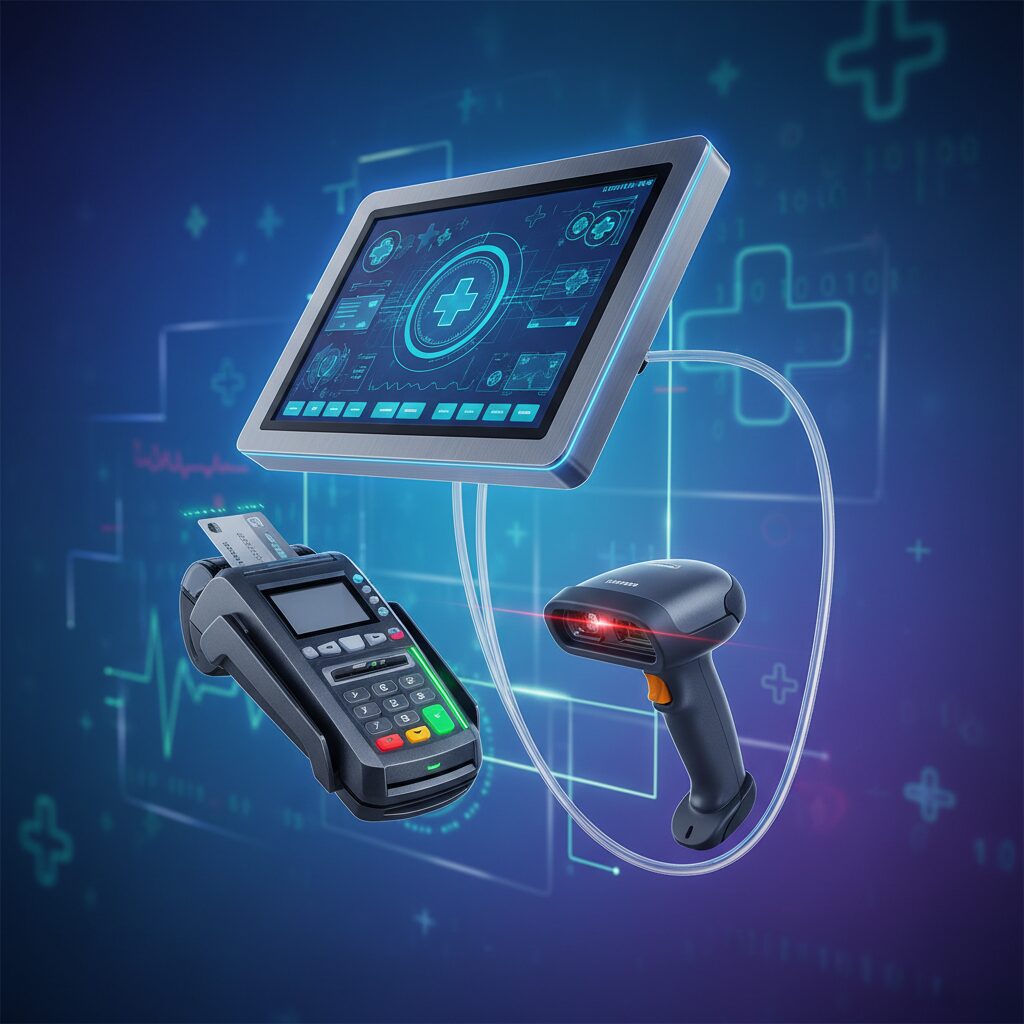
- Industrial-Grade Touchscreen: The interface of a hospital kiosk must be durable, highly responsive, and compatible with hospital-grade cleaning protocols. Capacitive touchscreens are the industry standard, providing an intuitive, reliable user experience.
- High-Speed Barcode and QR Code Scanner: To accelerate the check-in process, kiosks must enable patients to scan barcodes from appointment notifications or identification documents. A high-performance 2D scanner is essential to mitigate read errors and ensure efficiency.
- ID and Medical Aid Card Scanner: A dedicated card reader capable of rapidly capturing data from South African ID cards and medical aid cards is essential for precise data capture. This integration automates the validation of patient records and insurance information.
- Secure, Hardware-Locked Payment Terminal: The payment device must be a certified point-to-point encryption (P2PE) unit. This ensures that from the moment of card interaction, financial data is encrypted within the hardware itself, rendering it inaccessible to malicious actors even in the event of a network breach. The terminal must be fully PCI-DSS compliant and integrated to process transactions from all major local financial institutions.
Related Reading: Before finalizing your hardware selection, ensure you understand the shifting landscape of Healthcare Payment Systems South Africa: The Ultimate Guide to Modernising Your Practice, including how the NHI Act will impact your future billing and reimbursement models.
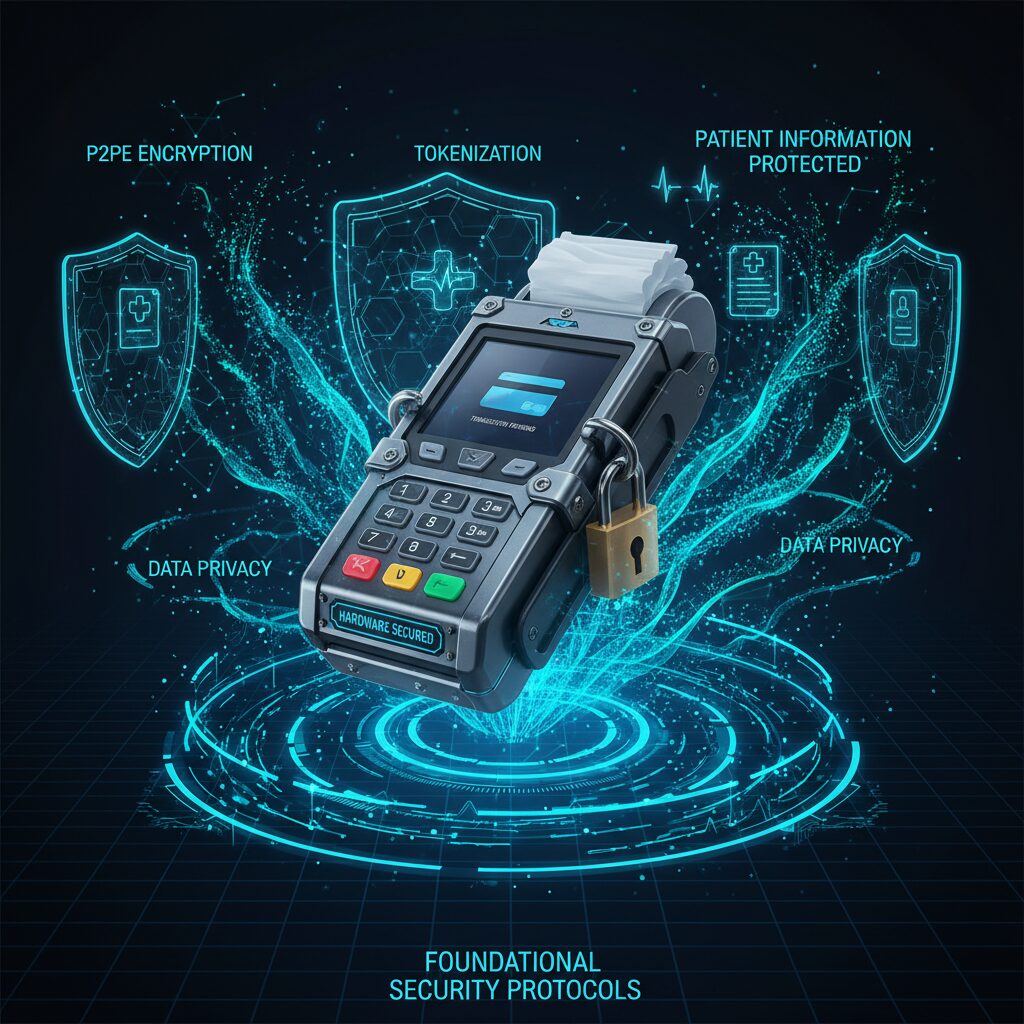
Foundational Hardware and Payment Security Protocols
In a healthcare environment, data security is paramount. Patients are entrusting the system with sensitive personal, medical, and financial information.
Hardware-Locked Payment Systems
A hardware-locked payment system architecturally separates the payment terminal as a self-contained, secure device. It is engineered to perform a single, dedicated function: processing payments securely. This segregation is a core security principle, as it prevents malware on the kiosk’s primary operating system from accessing or skimming cardholder data. This methodology is central to a secure patient self-service strategy, as outlined in expert guides on how to choose and implement self-service kiosks.
Physical Security and Tamper-Proofing
- Robust Enclosure: The hospital kiosk must be housed in a heavy-duty steel enclosure that can be securely bolted to the floor or a structural wall to prevent theft or unauthorized relocation.
- Secure Cable Management: All cabling—including power, network, and peripheral connections—must be fully concealed within the enclosure and routed securely to prevent tampering or accidental disconnection.
- Restricted Access: Access to internal components for maintenance and support must be controlled via secure locking mechanisms, with keys issued only to authorised personnel.
Bridging the Gap with Eezipay’s Secure Payment Ecosystem
Deploying a hospital kiosk is a significant step, but the technology is only as reliable as the payment infrastructure behind it. This is where Eezipay steps in. As specialists in secure, cashless payment solutions within South Africa, Eezipay provides the foundational “hardware-locked” security required to handle sensitive patient transactions.
By integrating Eezipay’s certified P2PE payment terminals and robust software interface, healthcare facilities can ensure that every patient self-service interaction—from co-payments at the pharmacy to settling accounts in ZAR—is encrypted, compliant, and seamless. Eezipay takes the complexity out of the “financial plumbing,” allowing hospital administrators to focus on what matters most: patient care.
Executing a Successful Hospital Kiosk Deployment
A successful hospital kiosk rollout isn’t about buying the flashiest tech; it’s about solving the very real problem of administrative lag. When you combine strategic placement with hardware that is actually built for the South African clinical environment, you do more than just digitize a clipboard. You create a patient self-service environment that respects the patient’s time and protects the facility’s data, allowing your medical staff to shift their energy away from paperwork and back toward patient care.
Ready to clear the queues and secure your facility’s financial future? Explore Eezipay’s Smart MPT Solutions to find the industrial-grade, hardware-locked payment terminals that make high-volume self-service possible. Don’t just upgrade your tech—revolutionize your patient journey today.