
Modern retail success depends on a seamless approach to payment processing, yet many business owners still struggle to bridge the gap between their sales floor and their stockroom. In a fast-paced market where every second counts, manual inventory tracking and fragmented systems aren’t just a headache—they are a drain on your bottom line that often leads to late nights and expensive mistakes. What if you could turn every transaction into a real-time data point that manages your shelves for you?
All-in-one systems have changed the game by merging your checkout process with powerful inventory management, POS capabilities, and live analytics. By consolidating these tools, you can eliminate human error, reclaim hours of your week, and finally focus on scaling your brand rather than counting boxes.
In this article, we’ll share five practical tips for using an all-in-one payment processing system to take full control of your inventory and turn your checkout into a growth engine.
The Role of Payment Processing in Modern Stock Management
An all-in-one payment processing system acts as the central nervous system of your retail store, linking your point-of-sale directly to your back-end database. Instead of treating sales and stock as two separate manual tasks, this technology ensures that every time a customer taps their card or scans a QR code, your inventory levels are adjusted instantly across all platforms. This real-time synchronization eliminates the need for end-of-day reconciliations and prevents the dreaded “out-of-stock” surprise for your customers. By centralizing these functions, you create a closed-loop system where financial data and physical product counts always remain in perfect harmony.
To help you maximize these benefits, here are five practical ways you can leverage an integrated payment processing system to sharpen your inventory control and boost your daily efficiency.
1. Automate Inventory Tracking
Relying on manual stock counts is a recipe for exhaustion and expensive mistakes. When you switch to an automated approach, you eliminate the guesswork and ensure your stock levels are always accurate and reflected in real-time.
A common starting point is using barcodes and scanners to log items as they enter or leave your shop. This gives you a clear, bird’s-eye view of your inventory, making it easy to spot and fix discrepancies before they become a problem.
However, an all-in-one payment processing system takes this a step further by doing the heavy lifting for you. Every time a sale is made, the system automatically deducts that item from your records. This means your stock levels stay current without you ever having to lift a pen or spend hours on manual data entry at the end of the day.
2. Simplify Payments
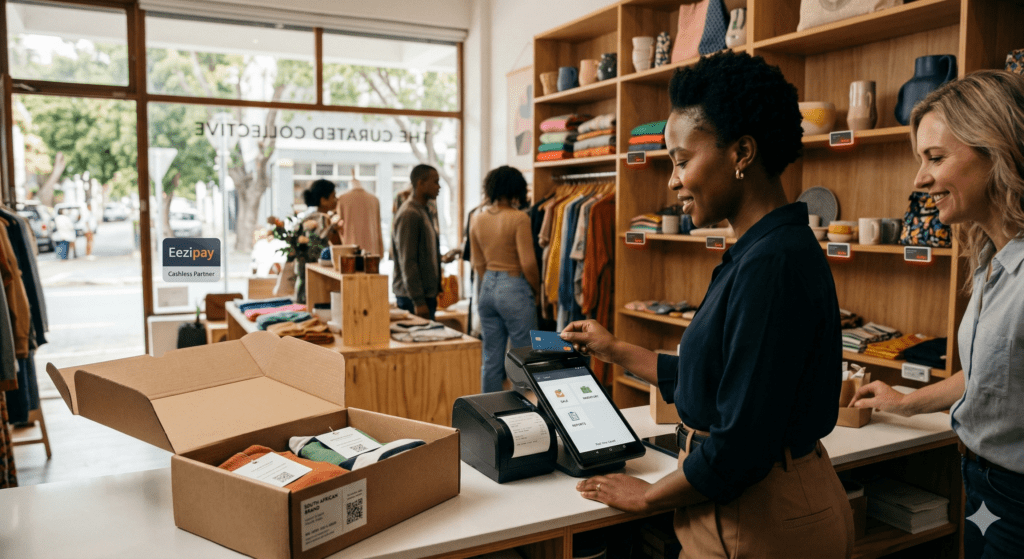
Let’s be honest: fumbling with cash or waiting for checks to clear is a massive drain on your energy and your clock. In a world where your customers expect to tap-and-go, sticking to old-school methods doesn’t just feel slow—it feels out of sync with how people actually live.
Moving toward a digital-first approach does more than just speed up the queue. It gives you peace of mind by cutting down on those annoying “where did that R50 go?” discrepancies and protecting your business from the risks of manual fraud. Plus, when the checkout is frictionless, customers leave happy—and in our competitive market, a smooth experience is what keeps them coming back to your store instead of the one down the road.
But the real magic happens when your payment processing stops being a standalone task and starts talking to the rest of your business. Imagine knowing exactly which products are flying off the shelves and who is buying them, without having to cross-reference three different spreadsheets. By integrating your payments with your customer data and inventory, you aren’t just “taking cards”—you’re gaining a high-level view of your shop that lets you make bold, data-backed moves to grow.
3. Improve Customer Experience
In the competitive South African retail market, a positive experience is often the only thing separating you from the shop next door. It is the secret to turning a once-off buyer into a loyal regular. When you move to an all-in-one payment processing system, you are doing much more than just upgrading your hardware; you are making life easier for your customers.
Think about the last time you were stuck in a long queue because the card machine was slow or the shop didn’t accept a specific digital wallet. It is frustrating. By offering a variety of cashless options, you cater to exactly how your customers want to pay. Whether they prefer to tap their card or use a mobile app, a fast and flexible checkout means shorter wait times and a much more professional impression.
The real advantage comes when your payments work in harmony with your inventory and customer data. When you actually see what people are buying and when they are buying it, you stop guessing. This insight allows you to tailor your stock to their specific needs and even personalize your promotions. Instead of generic marketing, you can offer them exactly what they are looking for, creating a shopping experience that feels thoughtful and keeps them coming back.
4. Streamline Operations
Beyond the checkout counter, an all-in-one payment processing system acts as a backend powerhouse for your daily admin. When your sales data, stock levels, and customer habits are all captured in one place, you stop being a “data collector” and start being a strategist. Instead of spending your Sunday nights cross-referencing bank statements with sales slips, you can pull real-time reports that show you exactly how your business is performing at any given moment.
This level of integration also takes the headache out of the more tedious parts of running a shop, like tax prep or basic bookkeeping. Because every transaction is logged with precision, the risk of human error in your financial records drops significantly. By letting the software handle the heavy lifting of data reconciliation, you reclaim the time you need to focus on what actually matters: serving your customers and planning your next big move in the market.
5. Ensure Data Security
In the digital age, protecting sensitive customer information is just as vital as securing the physical cash in your till. For any South African retailer, handling credit card details comes with a massive responsibility. Adopting a unified point-of-sale (POS) takes this weight off your shoulders by using high-level encryption and security protocols that keep data safe from the moment a card is tapped.
These systems are built to be PCI-compliant, meeting the strict global standards required for handling financial data. By using features like tokenization—where actual card numbers are replaced by unique codes—you ensure that even if a system were breached, the data would be useless to hackers. This does more than just protect your customers; it builds a foundation of trust that is essential for your brand’s reputation.
Security also extends to protecting your own bottom line from fraudulent transactions. With real-time fraud monitoring and proactive chargeback management, an integrated retail ecosystem helps you spot suspicious activity before it hits your bank account. This reduces the risk of financial loss and gives you the peace of mind to run your business without constantly looking over your shoulder.
A Simpler Way to Manage Payments + Operations
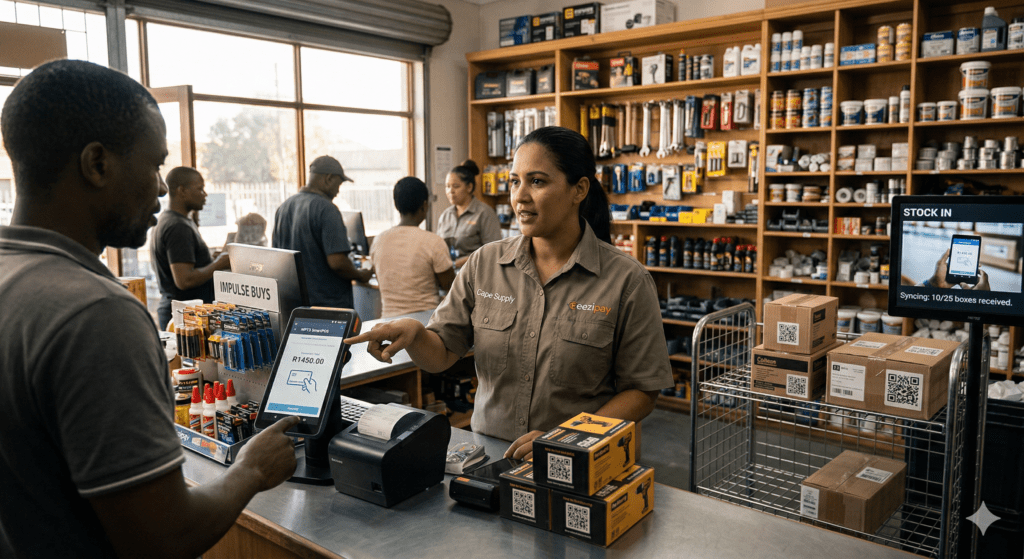
If your goal is to get a better handle on your stock levels and daily sales, then manual tracking or basic card machines can work well—up to a point. But once you need real-time inventory updates, multi-staff tracking, and professional reporting that actually saves you time, you’ll get better results with a system that combines payment processing and management in one place.
That’s where Eezipay fits. Our Smart POS and All-in-One Payment Terminals are designed for South African retailers who want to eliminate the gap between their sales floor and their back-office admin.
Take the next step with Eezipay:
- Explore the Hardware: View the MPT3 All-in-One Terminal
- See it in Action: Book a 15-minute demo call with our team
Conclusion: Future-Proof Your Retail Business
Managing a retail business in South Africa is demanding enough without having to fight your own systems. By upgrading your approach to payment processing, you aren’t just changing how you take money; you’re upgrading your entire operational strategy.
When your payments, inventory, and security are handled by a single, intelligent system, you reclaim the hours previously lost to manual admin and “spreadsheet fatigue.” More importantly, you gain the clarity needed to make bold, data-backed decisions that grow your brand. It is time to stop counting boxes and start scaling your business with a system that works as hard as you do.
Now we’d like to hear from you.
Are you planning to stick with your current setup for now, or are you ready to try a system that finally brings all your operations together under one roof?
Let us know and leave a comment below.