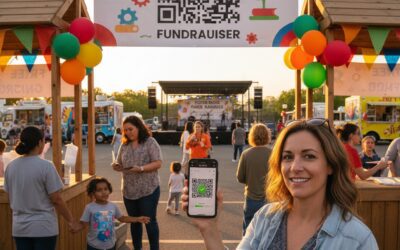
Integrating scan to pay and qr menu technology is no longer just a futuristic trend—it is the secret to surviving the high-speed rush of a university food court. On a bustling campus, students don’t have time for slow service or physical menus that have seen better days; they want a dining experience that is as mobile and fast-paced as their schedules.
By putting the power of ordering and payment directly into the customer’s pocket, university eateries are doing more than just modernizing—they are eliminating the friction that kills peak-hour profits. In this article, we’ll dive into how these two digital tools are revolutionizing campus dining by streamlining operations and creating a more accessible, hygienic, and efficient environment for students and staff alike.
Table of Contents
Understanding the Tech: What are Scan to Pay and QR Menus?
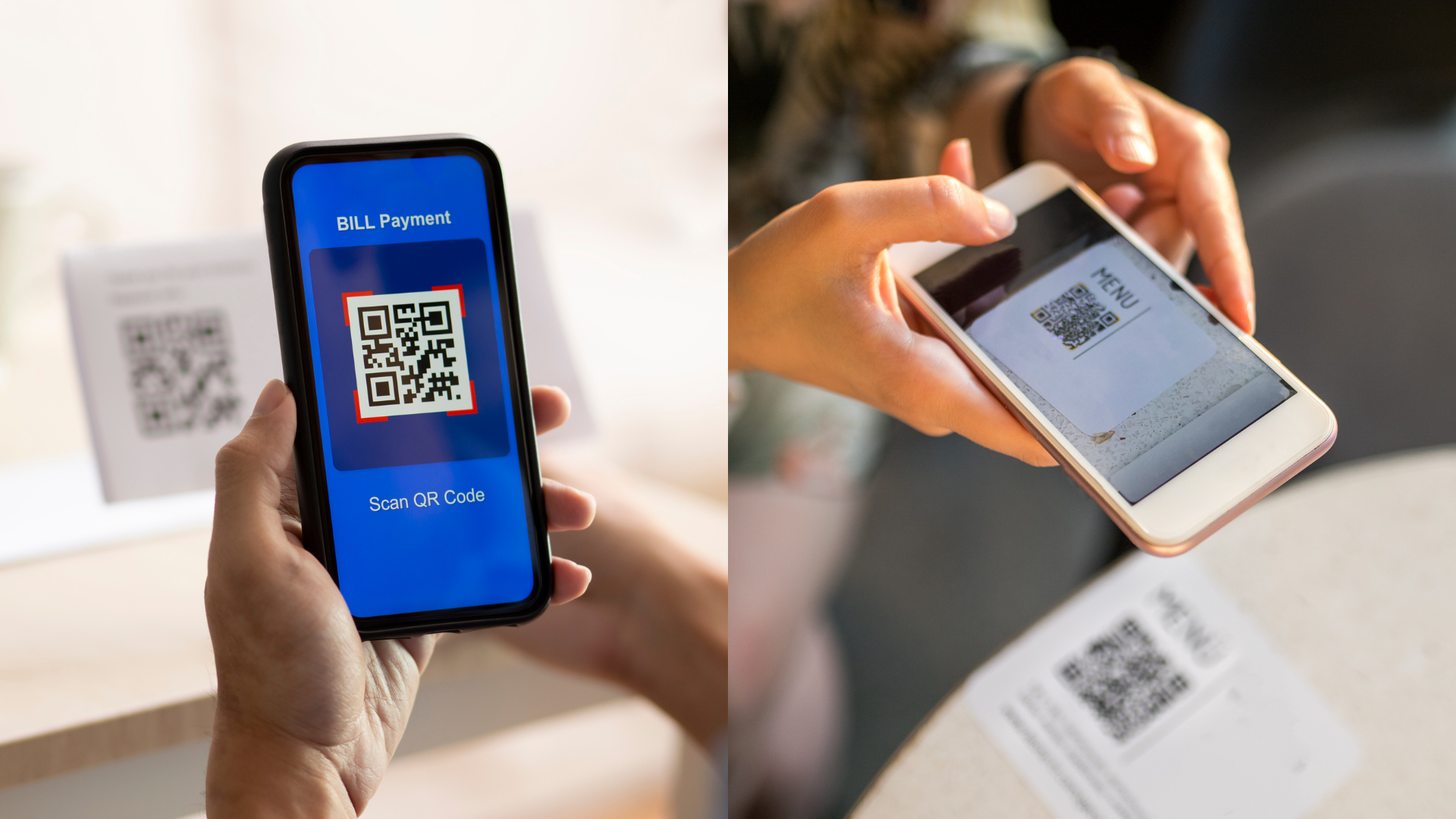
While they may seem like simple digital tools, scan to pay and qr menu systems are powerful integrations that bridge the gap between physical dining and digital ease. A qr menu is a unique, scannable code placed on tables or at entrances that, when scanned by a smartphone camera, instantly opens a digital version of the restaurant’s offerings. Pair this with scan to pay—a secure mobile payment method that allows students to settle their bill via a quick scan of a terminal or digital invoice—and you have a completely frictionless service loop.
Below, we’ll break down exactly why these two technologies are the secret ingredients to a more successful university eatery, from boosting your daily turnover to creating a safer, more inclusive environment for every student.
1. Increased convenience
The most immediate impact of adopting a scan to pay and qr menu system is the sheer amount of time it hands back to both the diner and the staff. In a fast-paced university environment, every second counts, and these tools remove the traditional friction points that slow down a meal.
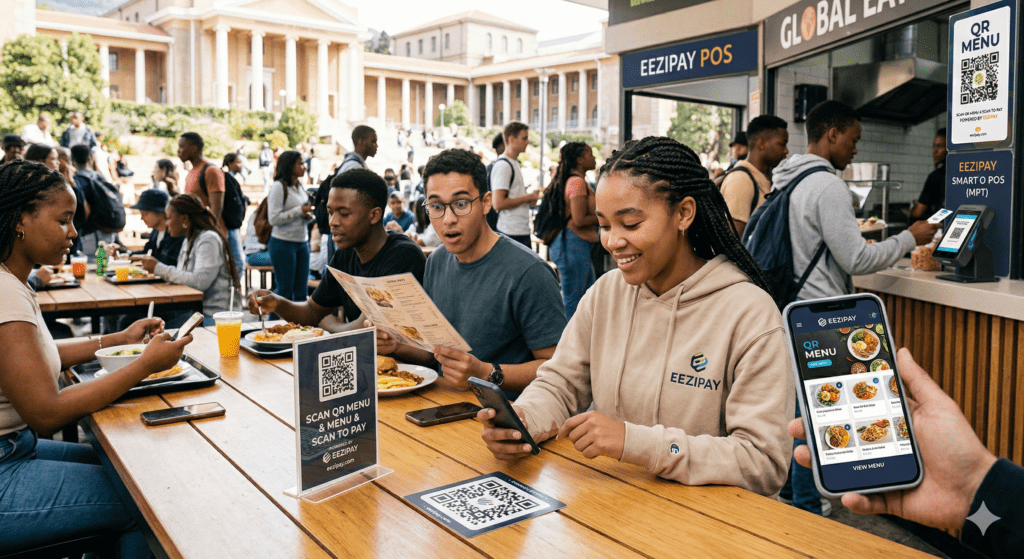
By using a qr menu, students can browse and place their orders the moment they sit down, completely bypassing the wait for a server to become available. When the meal is over, scan to pay allows for an instant exit; there’s no more flagging down staff for the check or digging through bags for cash and cards.
This seamless flow doesn’t just make for a happier, more relaxed customer—it also prevents the dreaded “bottleneck” at the counter. By shifting the ordering and payment process to the customer’s device, you reduce physical congestion and keep your floor staff focused on what matters most: delivering great food and service.
2. Improved efficiency
Efficiency in a university dining hall isn’t just about speed; it’s about having the right data to make smarter business decisions. By integrating scan to pay and qr menu systems, your restaurant moves from manual tracking to a high-tech, data-driven operation.
Because every order and payment is handled digitally, you gain access to real-time sales data. This allows you to identify exactly which dishes are trending during the lunch rush or which slow-moving items might need a promotional push. Instead of guessing, you can adjust your sales strategies on the fly to maximize your daily revenue.
Beyond the data, these tools also free up your most valuable resource: your staff. By automating the traditional hurdles of order-taking and manual payment processing, your team can spend less time managing paperwork and more time ensuring every student walks away satisfied.
3. Increased hygiene
In a busy campus environment, high-traffic surfaces can quickly become hotspots for germs. Modern diners, especially students, are more conscious than ever about the cleanliness of their surroundings and the safety of shared items.
By utilizing a qr menu, you effectively remove one of the most frequently handled objects in any restaurant: the physical menu. Instead of passing around a plastic-coated card that has been touched by dozens of people throughout the day, students simply use their own personal devices. This contactless approach significantly boosts the overall hygiene of your establishment and provides peace of mind to health-conscious customers, showing them that their well-being is a top priority.
4. Digital menus can be updated instantly
The flexibility of a qr menu is a game-changer for university kitchens that thrive on variety. Unlike traditional printed menus that are static and expensive to replace, a digital interface allows you to make changes in real-time. Whether you are launching a new seasonal dish, highlighting daily specials, or marking an item as “sold out” during a busy rush, your customers are always kept in the loop with the most accurate information.
This agility does more than just enhance the student experience—it directly impacts your bottom line. By switching to a qr menu and scan to pay ecosystem, you eliminate the recurring costs of professional printing and the waste of paper. You can experiment with your offerings as often as you like without spending a cent on new signage, making your operation both more sustainable and significantly more cost-effective.
5. Increased accessibility
Creating an inclusive dining environment is essential for any modern campus, and digital tools play a vital role in that mission. Scan to pay and qr menu systems offer a level of flexibility that traditional printed materials simply can’t match, especially for students with diverse needs.
For those with visual impairments or reading difficulties, a qr menu allows them to use their own smartphone’s accessibility features (such as screen readers, voice-over technology, or simple pinch-to-zoom) to browse your offerings independently. Similarly, scan to pay removes the physical struggle of handling small coins or navigating complex card reader interfaces. By shifting these interactions to a personal device, you remove barriers to entry and ensure that every student, regardless of their physical abilities, feels welcome and empowered at your restaurant.
A simpler way to manage your campus payments and operations
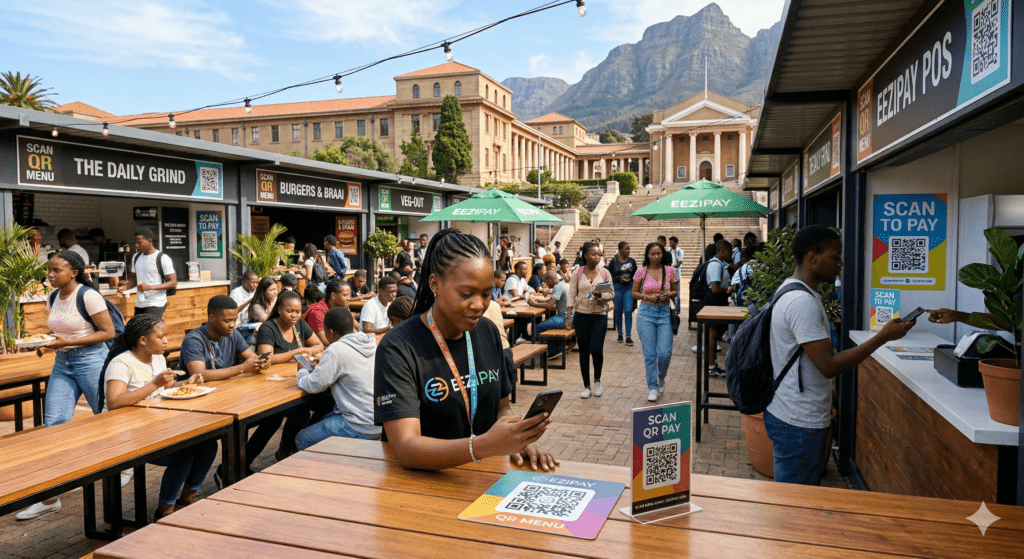
If your goal is to speed up service and offer more flexibility, using basic, standalone tools can work well—up to a point. However, once you need to manage real-time inventory across multiple stalls, track multi-staff performance, and sync your scan to pay data with a centralized reporting suite, you’ll get better results with a system that combines payments and management in one place.
That’s where Eezipay fits. Our Smart POS solutions are designed specifically for high-volume environments like university food courts, giving you a single interface to manage your qr menu updates and secure mobile transactions effortlessly.
Next Steps:
- Product: Explore the Eezipay Smart POS & Payment Terminals
- Related Guide: POS Systems: The Ultimate Guide for Small Businesses
- Action: Book a 15-minute demo call with our team
Conclusion: The Future of Campus Dining Starts Here
The evidence is clear: scan to pay and qr menu systems are no longer just “nice-to-have” features—they are the backbone of a modern, high-performance university eatery. By embracing these digital tools, you aren’t just keeping up with technology; you are actively removing the friction that slows down your service and limits your growth. From lightning-fast turnarounds to a more inclusive dining floor, the shift to digital is the simplest way to ensure your business remains the go-to spot on a crowded campus.
Now we’d like to hear from you.
Which of these benefits do you think would have the biggest impact on your daily operations right now?
Is it the increased hygiene, or the ability to update your specials in real-time?
Let us know by leaving a quick comment below.