What is Biometrics?
To understand the true biometric meaning, we must look beyond simple fingerprint scanning. Biometrics definition relies on the technical measurement and statistical analysis of an individual’s unique physiological and behavioral characteristics. The core function of this technology is to identify and authenticate individuals with unparalleled accuracy. Fundamentally, biometrics leverages “who you are” for identity verification, a significant advancement over methods that rely on “what you know” (a password) or “what you have” (a key card).
According to security experts at Kaspersky, a viable biometric identifier must be unique, permanent, and precisely measurable. This requirement makes characteristics such as fingerprints, facial structures, and vocal patterns ideal for robust authentication solutions.
The Biometric Authentication Process
The authentication process is an efficient and precise sequence executed in moments:
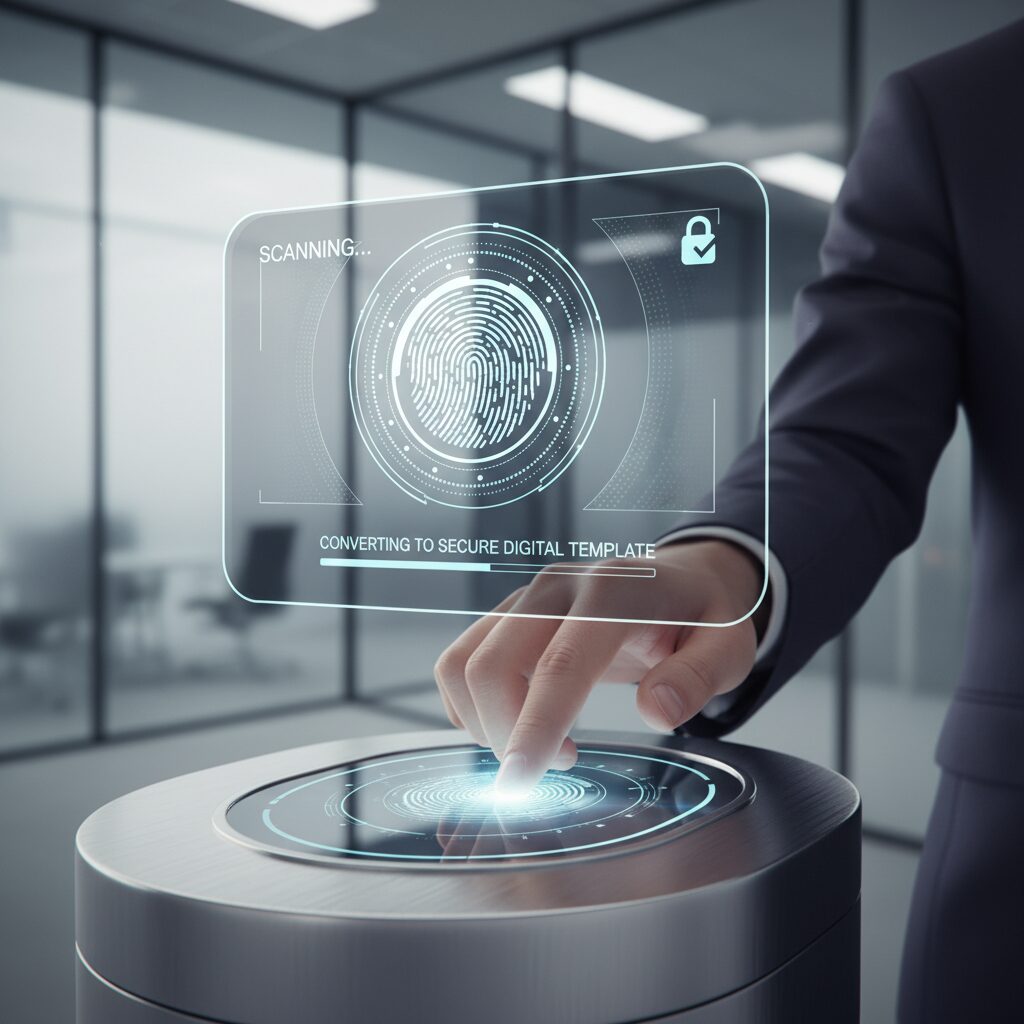
- Capture: An advanced sensor (such as a fingerprint scanner or high-resolution camera) captures the raw biometric data.
- Conversion: The system converts this data into a secure, encrypted digital template. This is not a stored image but a unique mathematical representation of the distinguishing features.
- Comparison: During an authentication attempt, the system performs a new scan and compares its digital representation to the stored template. A verified match confirms the individual’s identity and grants access.
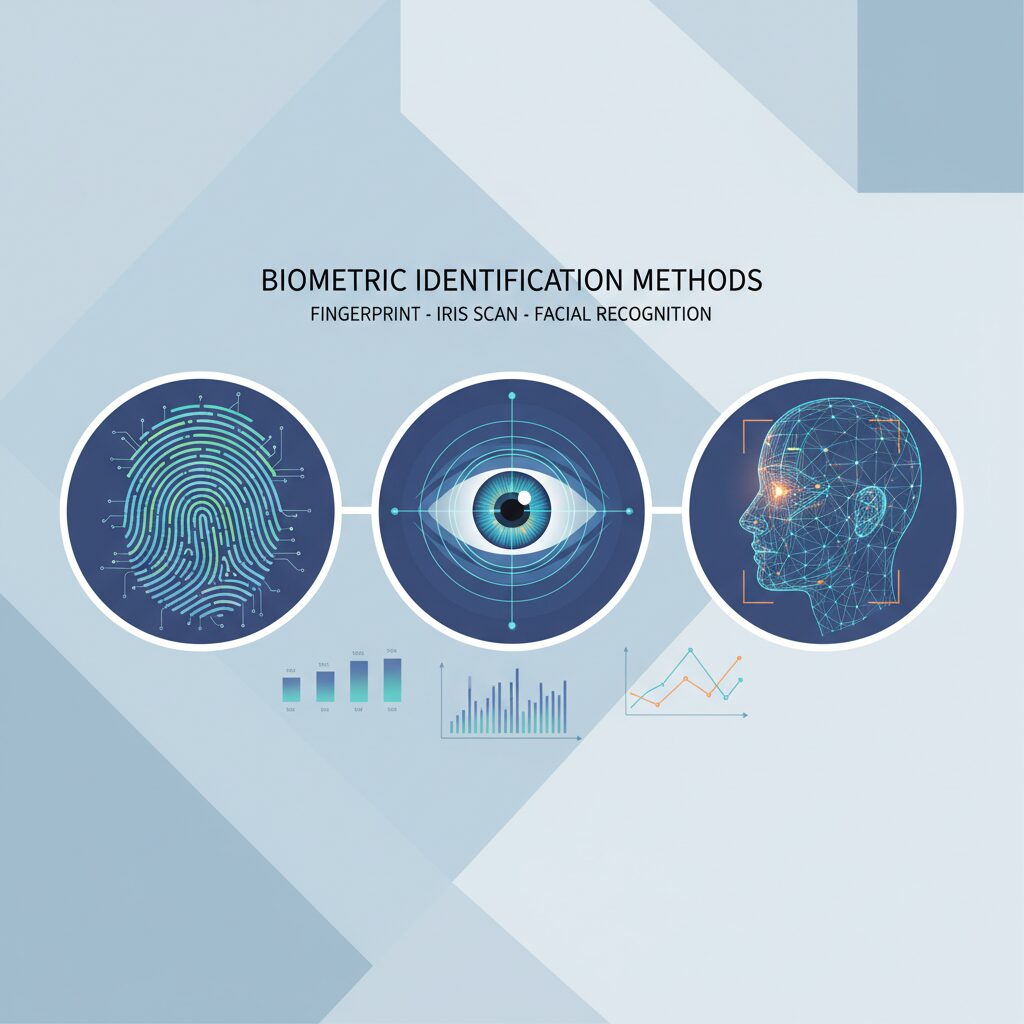
Infographic explaining what is biometrics and the biometrics definition through a biometric meaning visual of fingerprint and iris scans.
Primary Types of Biometric Technology
Biometric identifiers are classified into two main categories: physiological biometrics and behavioral biometrics.
Physiological Biometrics
These are the most prevalent and widely integrated forms of biometrics, based on an individual’s unique physical anatomy.
- Fingerprint Recognition: As one of the most established biometric modalities, this method analyzes the unique topographical patterns of ridges and valleys on a fingertip. It is a standard feature in modern smartphones and a primary technology for employee time and attendance systems.
- Facial Recognition: This technology maps the unique geometry of a person’s face by measuring variables such as the distance between eyes, the depth of eye sockets, and the contours of cheekbones. Apple’s Face ID is a well-known commercial application.
- Iris and Retina Scans: An iris scan analyzes the intricate, colored patterns of the iris, while a retina scan maps the unique pattern of blood vessels at the back of the eye. Both are considered exceptionally secure authentication methods.
- Vein Pattern Recognition: This method identifies the unique pattern of veins within an individual’s hand or fingers. As these patterns are subcutaneous, they are extremely difficult to replicate, offering a high level of security.
Behavioral Biometrics
This category of biometrics analyzes patterns inherent in human actions and is often deployed in high-security environments.
- Voice Recognition: Analyzes the distinct qualities of an individual’s voice, including pitch, tone, frequency, and cadence.
- Gait Analysis: Measures an individual’s manner of walking, assessing parameters like stride length, speed, and pressure.
- Typing Dynamics: Identifies a user based on their unique typing rhythm, speed, and keyboard pressure patterns.
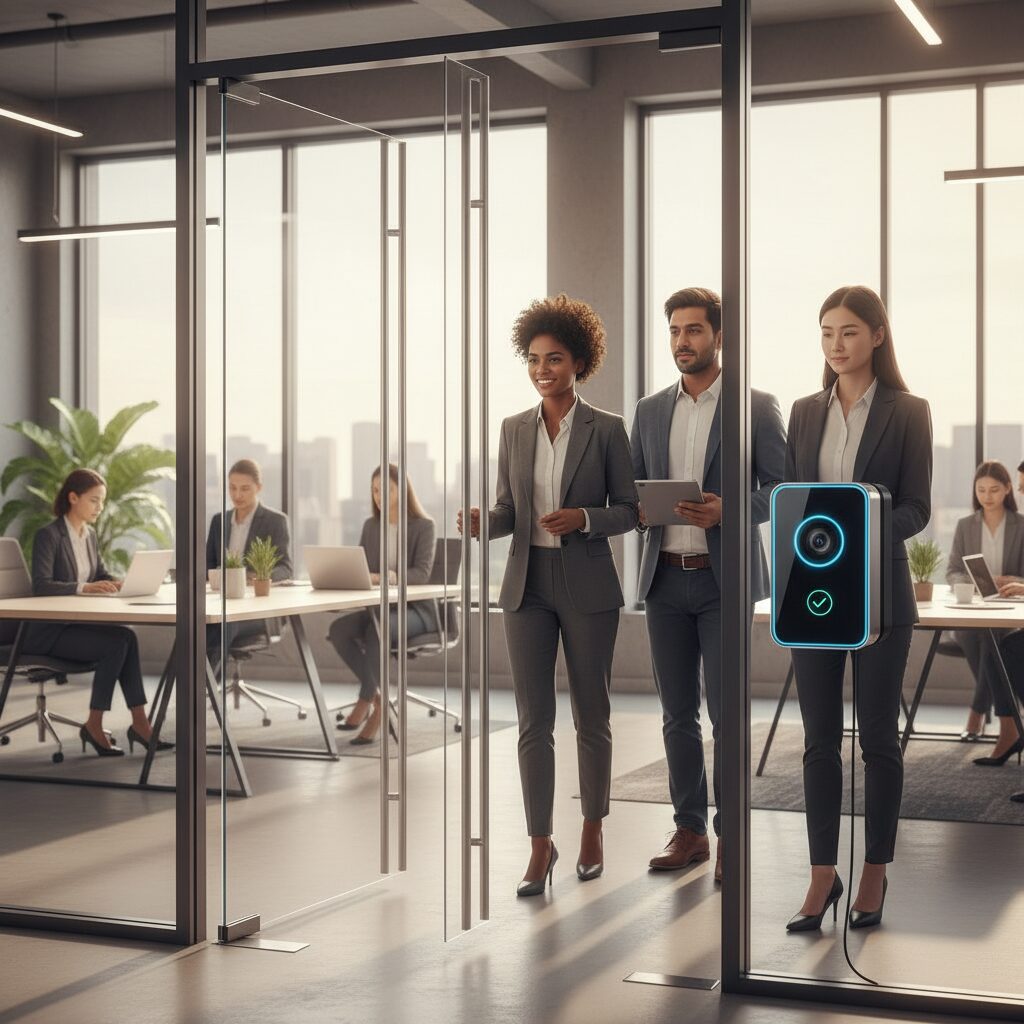
The Strategic Importance of Biometrics for Modern Organizations
For modern enterprises, the biometric meaning extends beyond security—it is about operational efficiency. Integrating biometric technology is a strategic investment that delivers tangible benefits in security, operational efficiency, and financial oversight. As detailed by enterprise security leader Proofpoint, it systematically addresses the vulnerabilities of legacy, password-based systems.
Enhanced Security and Data Integrity
Passwords can be compromised, shared, or lost. Physical access cards can be misplaced or duplicated. In contrast, biometric data is intrinsically tied to an individual and is exceptionally difficult to forge. Advanced systems incorporate “liveness detection” to defend against spoofing attempts using photographs or recordings. This capability dramatically mitigates the risk of fraud and unauthorized access, which is a paramount concern for any organization managing sensitive data or high-value assets.
Improved User Experience and Productivity
For both employees and clients, biometrics delivers a seamless authentication experience. It eliminates the operational drag of password reset requests and lockout incidents. Access becomes instantaneous and effortless, whether an employee is clocking in for a shift or a customer is authorizing a transaction. This streamlined interaction enhances user satisfaction and minimizes non-productive time.
Streamlined Operations and Accountability
In a B2B context, the true biometric meaning drives significant operational improvements. In a retail or industrial environment with large shift changes, you need a strategy that eliminates queuing and prevents fraudulent practices like “buddy clocking.” This is exactly what we cover in our guide: Biometric Clocking System: The Future of Time and Attendance Systems. Implementing this system ensures payroll accuracy and enforces accountability. It works by applying a strict biometrics definition to employee access, effectively securing high-value areas such as storerooms, server rooms, and executive offices with foolproof access control.
Integrating Biometric Solutions into Your Business
For any organization handling sensitive customer data, valuable inventory, or secure physical locations, the adoption of biometric technology is a logical and necessary step. From a small enterprise implementing a biometric POS system from a provider like Yoco to a large corporation securing its data centers, the applications and benefits are scalable and extensive.
When evaluating biometric solutions, data privacy and compliance with South Africa’s Protection of Personal Information Act (POPIA) are critical considerations. It is imperative to select reputable systems that feature robust encryption and secure storage protocols for all biometric templates.
By replacing outdated security measures with advanced biometric authentication, you secure your assets, empower your workforce, and foster a more secure and efficient operational environment. However, to truly apply this technical biometrics definition to a real-world setting, you need a broader framework. We break down exactly how to build this infrastructure in our guide, Access Control Systems: The Definitive Guide (2026 Update). Reading this is the critical next step to ensuring your strategy is designed to protect your organization from all modern threats.