
How Healthcare Payment Systems South Africa Operate Today
South Africa currently uses a two-part healthcare payment system. The public sector follows the Uniform Patient Fee Schedule (UPFS), which is a sliding-scale model where the cost of care depends on a patient’s income and the size of their household. At the same time, the private sector relies on a mix of medical aid schemes, gap cover, and significant out-of-pocket payments from patients.
This dual structure presents considerable operational challenges:
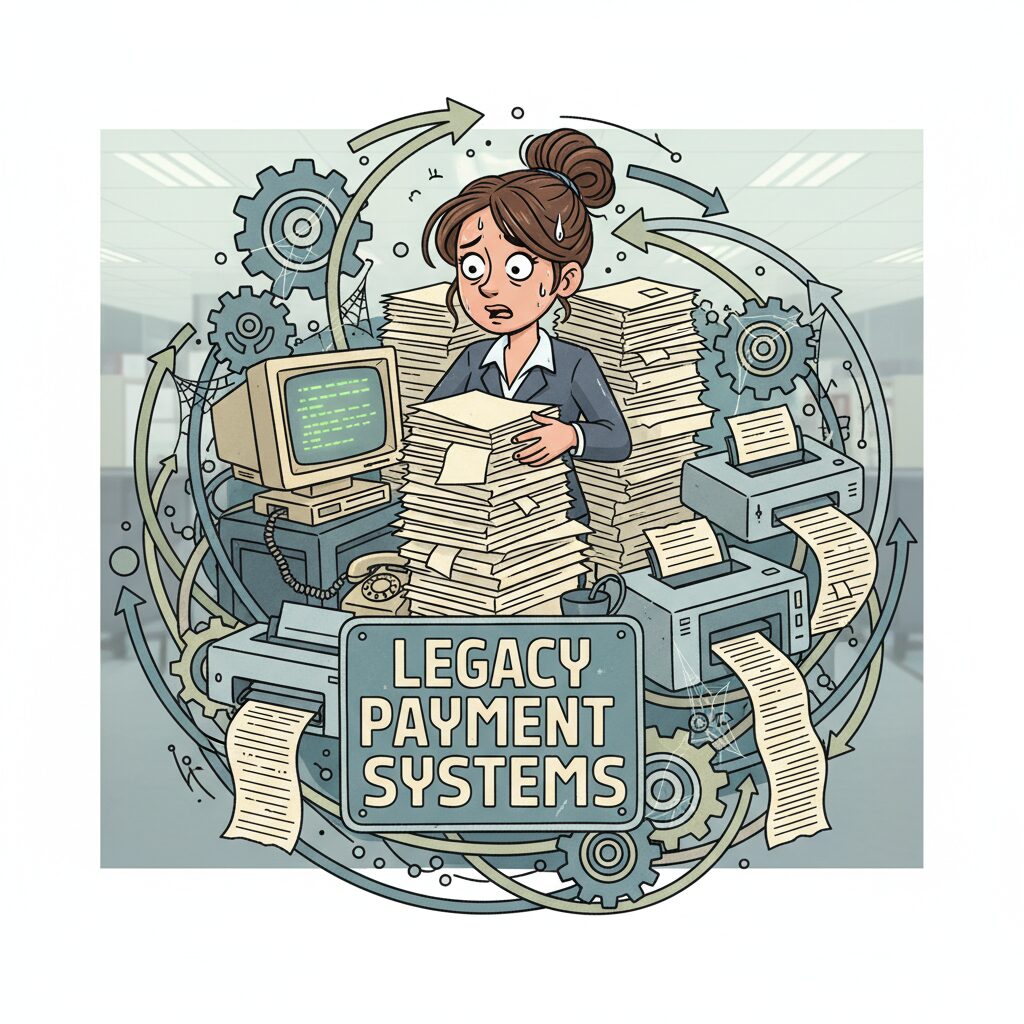
- Administrative Complexity: Medical personnel dedicate significant administrative hours to manual billing, payment reconciliation across multiple medical aids, and collections management for outstanding co-payments. This is a core challenge in current medical practice management.
- Substantial Co-Payments: Patients in the private sector often encounter large, unplanned co-payments. These upfront costs can exceed R40,000 prior to treatment, placing significant financial pressure on individuals and families.
- Revenue Instability: Delayed payments and defaults result in unpredictable cash flow, complicating effective financial management for medical practices.
- Compromised Patient Experience: The financial uncertainty and lack of transparency in billing can detract from the primary objective of delivering optimal patient care and facilitating recovery.
The Impact of the NHI Act on Future Medical Billing Models
The National Health Insurance (NHI) Act is the primary driver of change for the medical industry. Its main goal is to create a single, publicly funded system that covers all South Africans, eventually removing the need for patients to pay out-of-pocket for core healthcare services. This shift will fundamentally reshape how healthcare payment systems South Africa operate, moving the entire ecosystem toward a more centralised and digitally managed model.
This legislation is more than just a policy update; it is a total restructuring of how your facility will earn revenue. By the target date of 2028, the NHI will fundamentally change the way providers are reimbursed. Instead of billing patients directly, practices will interact with a central NHI Fund. Because this fund will handle a massive volume of transactions, the government is moving toward a fully digital, cashless ecosystem.
For your facility, this means that adopting modern technology is no longer optional. Staying ahead of these changes is a vital part of proactive medical practice management, ensuring you can process claims with the efficiency and transparency the new law demands.
The Shift Toward Cashless Healthcare Payment Systems South Africa
A cashless operational environment is no longer just a theoretical concept; it is a practical necessity for modern healthcare facilities. By moving away from cash, your facility can mitigate security risks, reduce administrative errors, and simplify the entire payment lifecycle. In practice, this forms a core part of modern medical practice management, helping you streamline everything from patient check-in to final financial reconciliation.
The Rise of Hospital Self-Service Kiosks
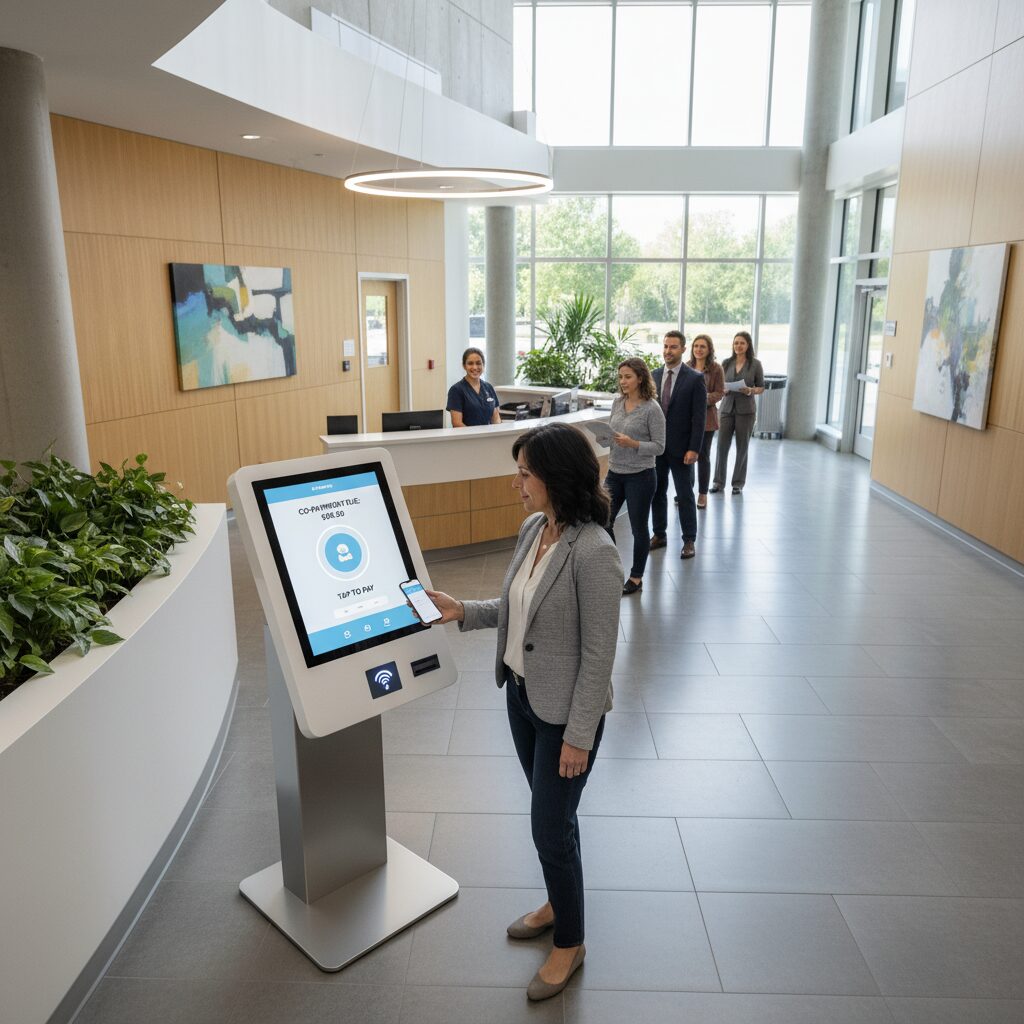
Self-service kiosks are an integral component in modernising the patient journey. These terminals empower patients with self-service account management capabilities, enabling administrative personnel to focus on higher-value responsibilities.
Key functionalities of a hospital kiosk include:
- Streamlined Check-In: Patients can confirm appointments and update personal information, eliminating lengthy queues.
- Instant Co-Payment Processing: Kiosks integrate with medical aid scheme databases to display precise co-payment amounts, which can be settled instantly via card or mobile payment methods.
- Account Management: Patients are empowered to view payment histories, manage outstanding balances, and print statements as required.
By automating routine administrative functions, this technology reduces queues and improves overall patient flow. Most importantly, it provides full cost transparency before treatment begins, ensuring that your healthcare payment systems South Africa remain efficient and patient-friendly.
To move from theory to practice, you need a clear plan for physical deployment and hardware selection. Our comprehensive roadmap, Hospital Kiosk: The Ultimate Guide to Integrating Patient Self-Service Systems, explores the critical logistics of placement and the industrial specs required for a high-traffic medical environment.
Modernising Co-Payment Processing
Doing co-payment calculations and reconciliations by hand is quickly becoming a thing of the past. Today, modern payment platforms handle this entire process automatically. By linking directly with medical aid schemes, these systems can check a patient’s benefits in real time.
Your team can instantly see what the medical aid covers and what the patient needs to pay. Because the system is so accurate, patients can settle their portion right away using a card, tap-to-pay, or a mobile wallet. This approach is a vital part of medical practice management because it ensures you get paid immediately while making the experience much clearer and easier for your patients. As a result, healthcare payment systems South Africa are becoming faster, more predictable, and far easier for both staff and patients to navigate.

Understanding Future Provider Reimbursement: Capitation and DRGs
Under the NHI framework, the government will introduce new provider reimbursement mechanisms designed to control costs and enhance quality of care, as detailed in an analysis by the International Bar Association. This will require medical practices to adapt their financial management strategies.
Capitation Models for Primary Care
Under the NHI, primary healthcare providers will likely move toward a capitation model. It represents a significant shift in how healthcare payment systems South Africa currently operate.
-
How it works: Your practice receives a set, upfront fee for every patient registered with you. This payment stays the same regardless of how many times a patient visits within a specific timeframe.
-
The goal: This model encourages a focus on preventative care. Since your income is based on a fixed amount per person, keeping your patients healthy and managing resources wisely helps ensure the practice remains profitable.
Diagnosis-Related Groups (DRGs) for Hospitals
For hospitals, a system based on Diagnosis-Related Groups (DRGs) is anticipated.
-
How it works: Instead of billing for every individual bandage or test, the hospital receives one single, fixed payment for everything related to a specific diagnosis or procedure.
-
The goal: The model encourages hospitals to standardise care and operate more efficiently. While the facility takes on the financial risk if costs go over that fixed amount, it also benefits when it provides high-quality, cost-effective care.
Understanding these new reimbursement models is only the first half of the battle; the second half is ensuring your practice has the financial infrastructure to survive the transition. To discover how to bridge this gap, read our strategic guide: Clinic Management Software: A Roadmap to Digital Wallets for Patient Care.
This guide offers a practical blueprint for using integrated digital wallets to eliminate the risk of bad debt. You will learn how to implement an “allowance” system that secures patient funding upfront—protecting your revenue stream while providing families with a transparent, dignified way to manage the costs of long-term care.
Solving the Modernisation Puzzle with Eezipay
For many facilities, the biggest hurdle to modernisation is knowing which tools actually fit the unique South African context. This makes Eezipay a practical solution for facilities looking to modernise healthcare payment systems South Africa without adding unnecessary complexity. As a fintech provider specialising in cashless payment environments, Eezipay offers the practical technology needed to bridge the gap between old manual habits and the digital requirements of the NHI.
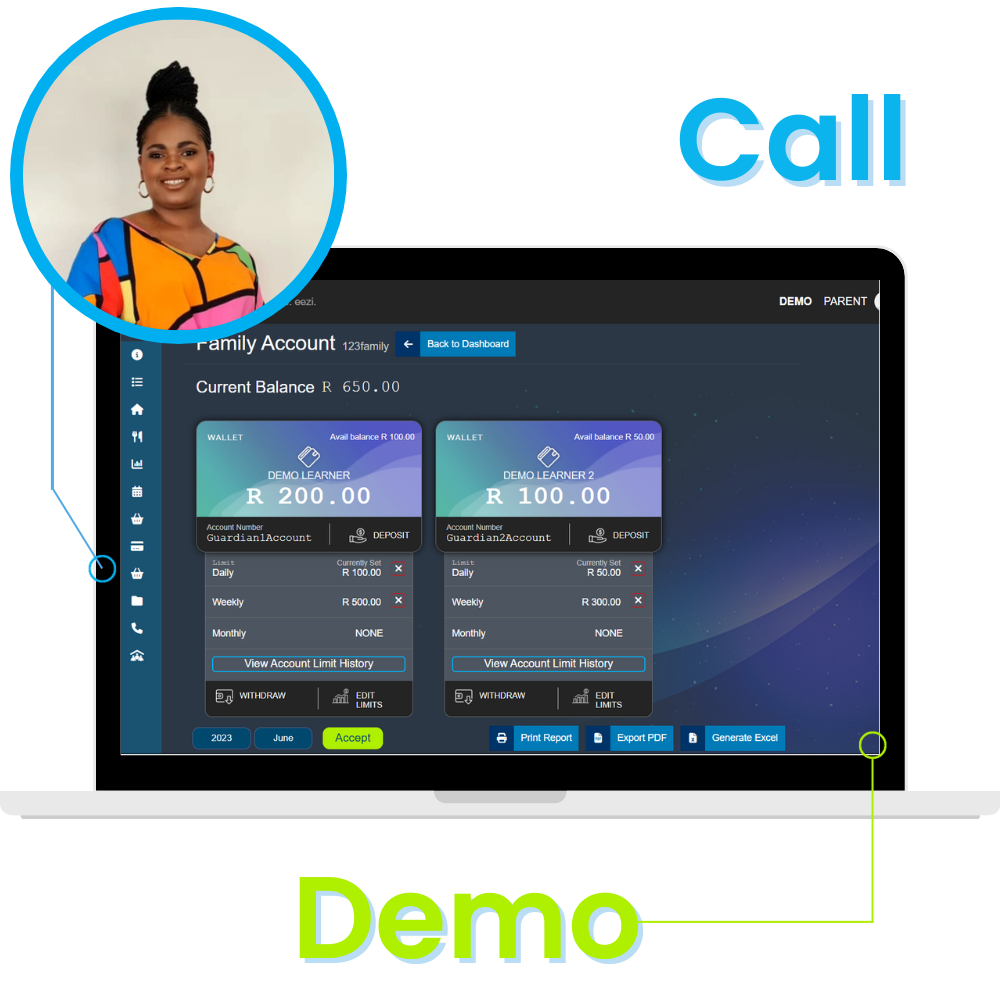
Instead of a generic card machine, Eezipay provides a dedicated ecosystem for medical practice management. Their system allows a hospital or clinic to operate as a “closed-loop” environment. This means that from the moment a patient uses a self-service kiosk to check in, their medical aid data and payment requirements are tracked automatically.
Whether it is processing a tap-to-pay co-payment at the front desk or managing complex billing through an integrated platform, the goal is to make healthcare payment systems South Africa invisible and error-free. By using a specialist provider, you ensure that your financial data is secure and that your facility has the reporting tools needed to stay profitable as reimbursement models change.
Preparing Your Practice for the Future of Healthcare Payments
Moving to a modern, cashless system offers major advantages for medical practice management by improving cash flow and cutting down on paperwork. It also makes things much easier for your patients. As the country moves closer to the full NHI rollout, adopting the right technology now is a smart move for any forward-thinking medical facility.
To prepare for this transition, facilities must:
- Invest in an Integrated Payment Platform: Adopt a payment solution capable of processing diverse payment methods (card, mobile, EFT) and designed for seamless integration with existing practice management software.
- Automate Billing and Co-Payment Workflows: Implement systems that provide real-time verification of medical aid benefits and automate the co-payment collection process at the point of service.
- Deploy Self-Service Solutions: Integrate patient-facing technologies, such as self-service kiosks, to streamline check-in and payment procedures, thereby increasing operational efficiency and patient satisfaction.
- Monitor NHI Developments: Maintain awareness of NHI implementation timelines and proposed reimbursement models to ensure strategic alignment and operational readiness.
The Future of Healthcare Payment Systems South Africa Starts with Simplicity
The way healthcare payment systems South Africa operate is no longer a background function, it directly shapes your cash flow, your administrative workload, and how patients experience your practice. As expectations rise and systems become more connected, practices that remove complexity and create a seamless payment journey will be better positioned to operate efficiently and deliver a higher standard of care.
If you are looking to modernise your medical practice management and streamline the way you handle payments, now is the time to act. Explore how Eezipay can help you create a faster, more reliable, and patient-friendly payment experience, and take the next step toward a smarter, future-ready practice.